An AI body generator is a software application that uses deep learning neural networks to generate, modify, or reshape human bodies in images or 3D models. Unlike old manual warping tools like Photoshop Liquify, modern body generators analyze structural proportions to alter volume, muscle definition, or body shape automatically. For anyone tracking a workout program or visualizing a target physique on their own photo, these tools replace hours of manual editing with automated generative processing.
In late 2026, the tech landscape split into two distinct paths: full text-to-image engines that create realistic humans from scratch, and photo-preserving body shape editors that modify your real photos without distorting your face or background. Selecting the right tool depends on whether you want a virtual 3D avatar, a completely synthetic image, or a realistic fitness goal preview based on your existing photos.
Comparison of Top AI Body Generators in 2026
The table below breaks down the top full body AI generator platforms available as of October 2026, comparing their core technology, key constraints, and primary ideal use case.
| Generator Platform | Input Type | Manual Step Removed | Primary Best Use Case | Cost Model |
|---|---|---|---|---|
| BodyBlend | User Photo | Background masking & Liquify tweaking | Photo realistic body shape edits on real photos | Free trial, then $9.99/wk or $14.99/mo |
| Stable Diffusion + ControlNet | Text + Depth Map | Manual 3D rigging | Precise pose-guided synthetic photo generation | Open-source (Free local / Paid cloud) |
| MetaHuman Creator | 3D Mesh / Parameters | Sculpting human anatomy from scratch | Studio-grade photorealistic 3D human character creation | Free for Unreal Engine use |
| Ready Player Me | Selfie / Customizer | Manual rigging for game engines | Cross-platform stylized 3D avatars for apps & VR | Free for personal use |
| MakeHuman | Parametric Sliders | Manual mesh topology creation | Open-source anatomical base mesh design | 100% Free & Open-source |
| DALL·E 3 | Text Prompt | Drawing & digital painting | Creating conceptual synthetic human images | Included in ChatGPT Plus ($20/mo) |
1. BodyBlend: Best for Quick Fitness Goal Visualizations on Real Photos
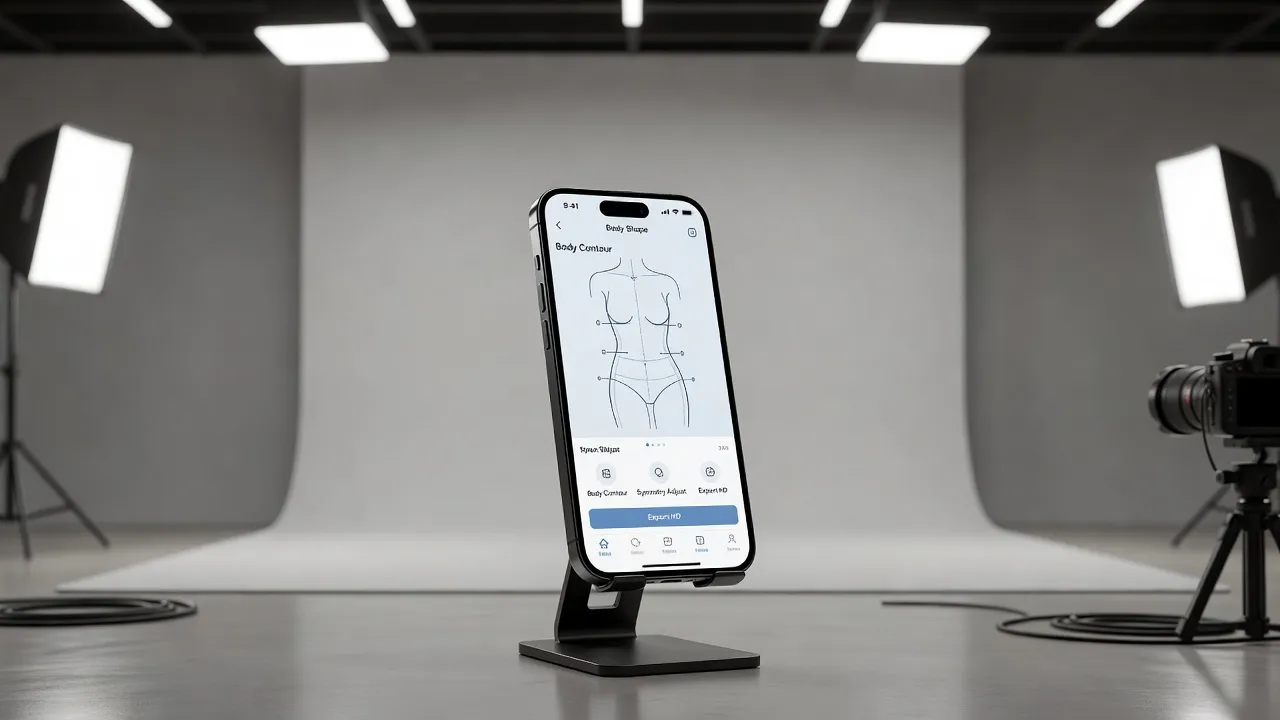
BodyBlend is an AI body shape editor app for iOS that lets users upload a photo and reshape their body in one tap. If you are tracking a weight-loss goal or trying to preview toned muscle on your own image, traditional image editors require complex brushwork that usually distorts background lines. BodyBlend solves this by separating the body mesh generation from the background layer entirely.
How BodyBlend Preserves Faces and Backgrounds
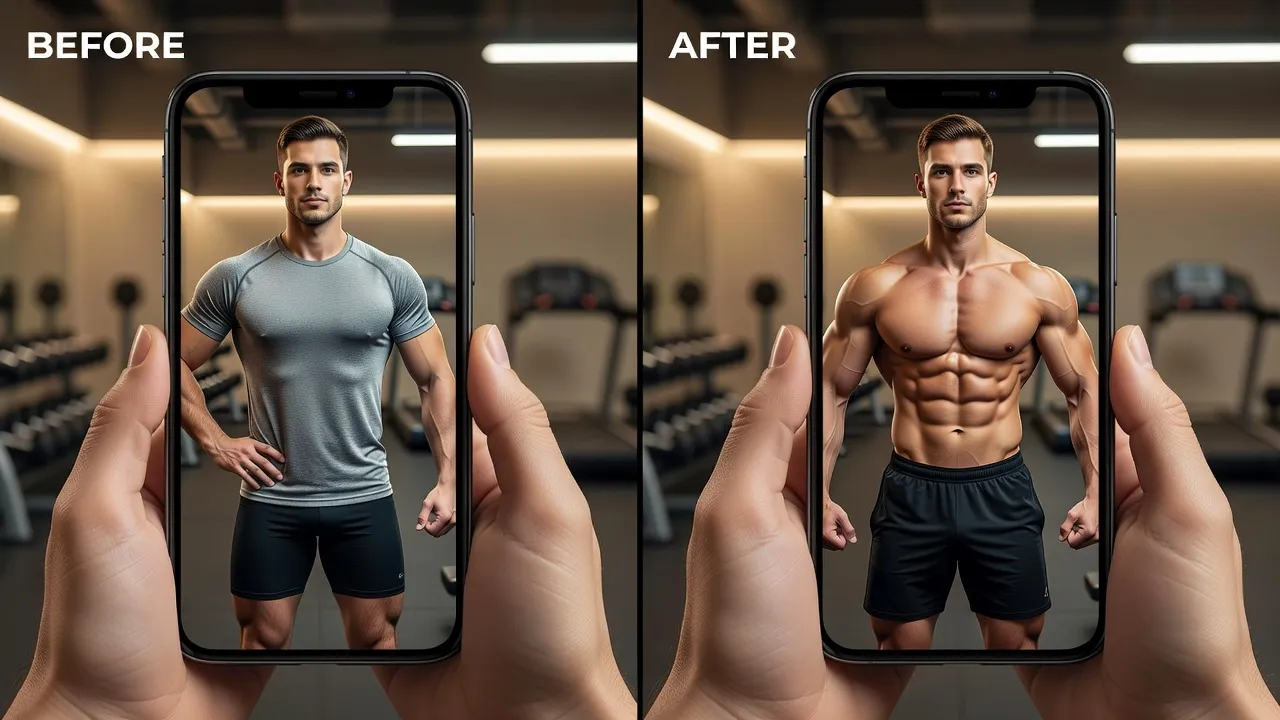
BodyBlend isolates body contours using semantic segmentation to modify muscles or torso shape without touching the face, clothing, or background. When using older apps, sliding a hip or waist tool usually warps doors and floor tiles behind you. BodyBlend offers 17 preset body shapes (such as Fit, Muscular, Ripped, or Hourglass) and 11 targeted body part edits (like small waist or muscular arms) specifically tailored for both men and women.
If you are evaluating options across mobile platforms, check out our guide to the best AI body editor apps to see how photo-preserving editors compare against prompt-based generators. You can download BodyBlend on the App Store to test a generation on your own workout photos.
How does Stable Diffusion with ControlNet handle human body generation?
Stable Diffusion paired with ControlNet handles human body generation by using openpose keypoints and depth maps to lock down physical proportions and posture. Standard diffusion models frequently fail at rendering anatomically correct hands, feet, and limbs because text prompts lack spatial awareness. ControlNet fixes this by extracting structural skeletons from input images, forcing the generative diffusion model to build pixels strictly over that framework.
- Input Image or Pose passes through OpenPose or Depth Map Extractor
- The extracted pose or depth information feeds into Stable Diffusion UNet
- Text Prompt also feeds into Stable Diffusion UNet
- Stable Diffusion UNet outputs Anatomically Accurate Output
Why ControlNet Changed Open-Source Body Generation
- Pose Alignment: It reads exact joint positioning so hands and legs remain in natural alignment.
- Reference Preservation: Users can feed in a target body shape and transfer that topology directly to a new subject.
- Surface Depth Control: It uses MiDaS depth estimation to ensure clothing clings correctly to modified torso volumes.
As of late 2026, setting up Stable Diffusion locally remains the most flexible choice for creators who want absolute control over lighting, clothing, and body composition. However, it requires a powerful local GPU with at least 12GB of VRAM and a steep learning curve compared to consumer mobile tools.
How does MetaHuman Creator (Epic Games) generate realistic humans?
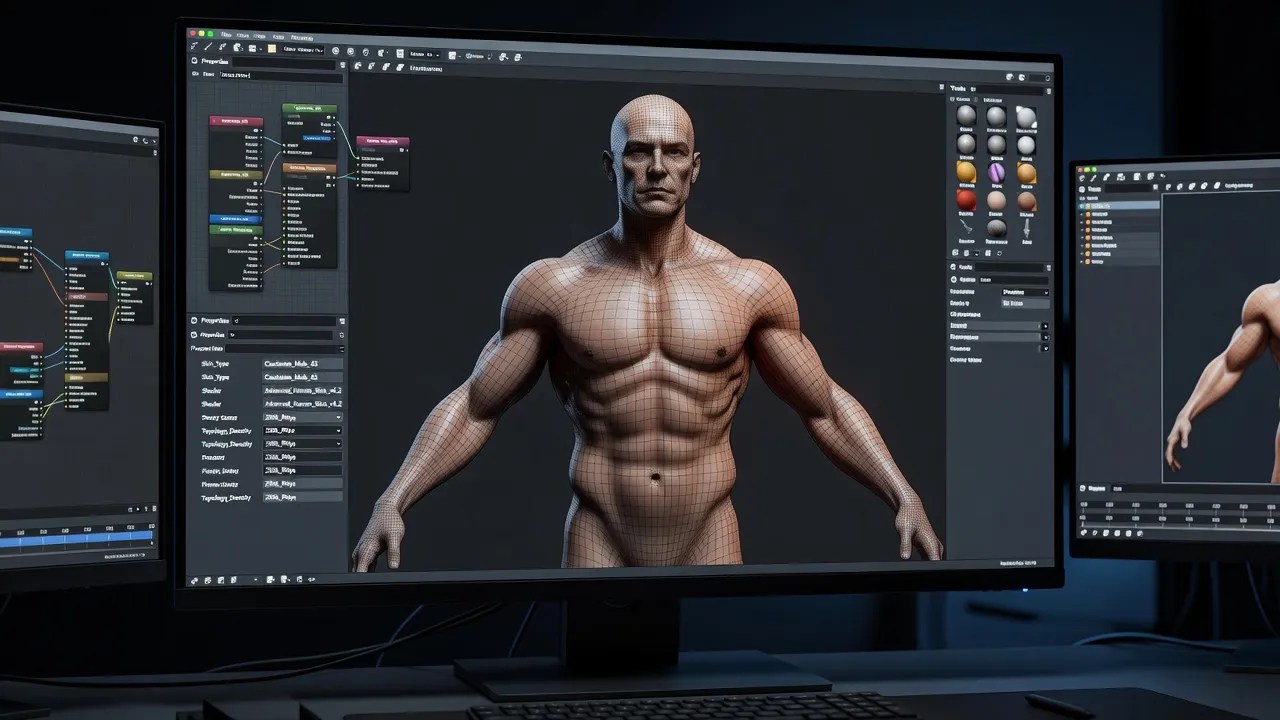
MetaHuman Creator generates realistic humans by leveraging a massive cloud-based library of real human volumetric scans built into Unreal Engine. According to the official Unreal Engine MetaHuman documentation, the web-based app lets users adjust facial structures, skin textures, body height, and body mass index (BMI) using parametric sculpting nodes.
Key Strengths and Limitations of MetaHuman
The primary strength of MetaHuman is its studio-grade animation readiness, though it requires export into Unreal Engine for final rendering. For game developers and film animators, it removes months of character rigging.
- Proportion Accuracy: Body proportion changes scale naturally with height and weight sliders without stretching skin textures.
- Rigging Integration: Every body generated includes a complete skeleton ready for motion capture data.
- Hardware Barrier: It is designed for 3D real-time rendering rather than quick social media photo editing.
How realistic are Ready Player Me avatars?
Ready Player Me avatars focus on stylized, mid-poly cartoon aesthetics rather than photorealism. Built primarily for games, virtual reality apps, and metaverse environments, the platform converts a single facial selfie into an interactive 3D avatar in seconds.
Avatar Features and VR Integration
While Ready Player Me does not produce photorealistic human skin, it excels at cross-platform interoperability. According to developer guides on the Ready Player Me platform, over 10,000 apps and games support importing these avatar files directly.
- Selfie-to-Avatar Pipeline: The AI reads facial structure from a camera snap and maps it onto a customizable base body.
- Body Shape Selection: Users can select between several standardized body silhouettes to fit different virtual clothing assets.
- Cross-Game Portability: One avatar works across VRChat, spatial apps, and web-based games seamlessly.
If your primary goal is visualizing how body weight changes affect your actual personal photos, stylized avatars will not provide the anatomical detail you need. For realistic photo transformations, tools built specifically for body weight visualizer goals yield more practical results. Learn more in our breakdown of body weight visualizer apps.
Is MakeHuman a good open source realistic human body generator?
Yes, MakeHuman is an excellent open-source human body generator for artists who need accurate parametric base meshes without AI cloud fees. Developed as a community project, the platform uses traditional parametric algorithms rather than neural diffusion networks to morph human body shapes.
The following inputs feed into the MakeHuman Morphing Engine:
- Age / Gender Sliders
- Muscle / Weight Ratio
- Proportion Controls
The MakeHuman Morphing Engine outputs Clean 3D Topology (OBJ/FBX).
Parametric Morphing vs. Generative AI
MakeHuman operates entirely offline by manipulating clean 3D topology based on target measurements. As detailed on the MakeHuman Community project page, the software allows full adjustment of muscle tone, body fat percentage, frame height, and limb lengths.
- Zero Hallucinations: Unlike generative AI models, MakeHuman never invents extra fingers or distorted limbs.
- Clean Topology: Generates low-polygon quad meshes ideal for 3D printing or artistic reference.
- Outdated Texturing: Standard skin shaders look dated compared to 2026 diffusion networks, requiring external texturing in Blender.
What is Meta's Make-A-3D (Make-A-Scene) for human body generation?
Meta's Make-A-3D architecture generates textured 3D human body models directly from 2D reference images and textual descriptions using NeRF technology. By combining neural radiance fields (NeRF) with diffusion priors, this research model infers unseen angles of a human body (like the back of a torso) from a single front-facing camera shot.
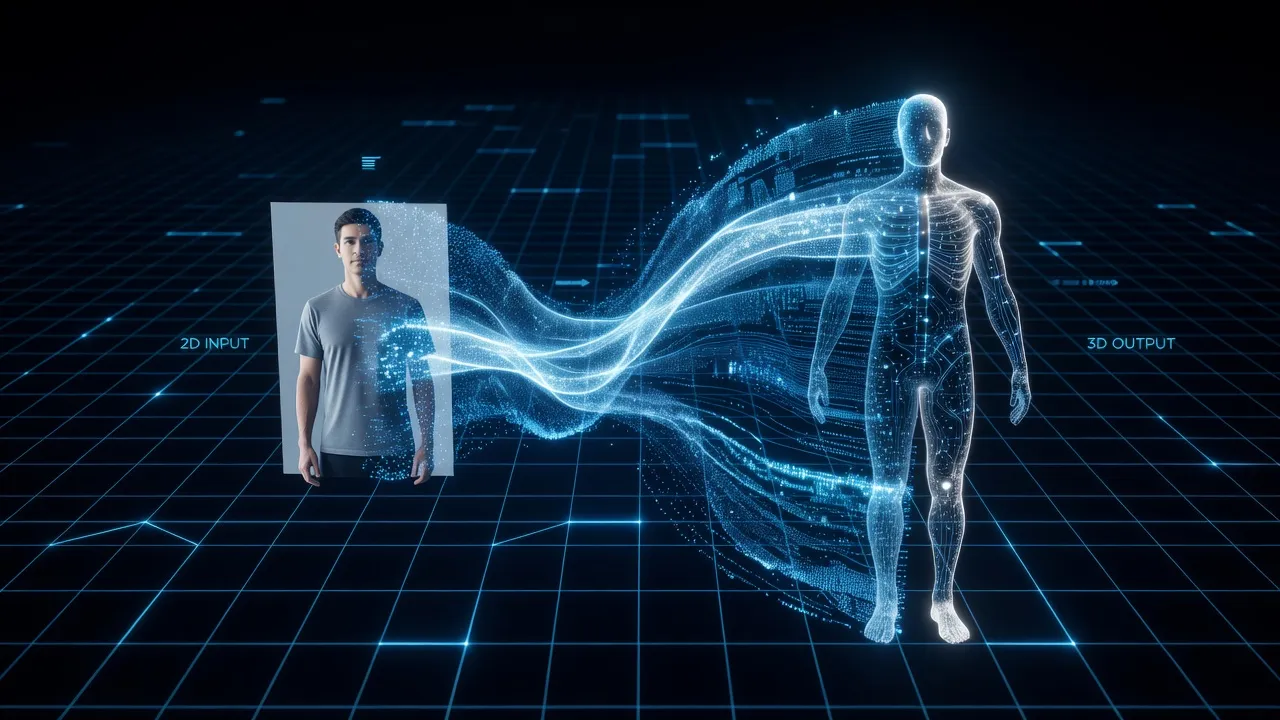
Practical Applications of Volumetric AI
- Single-Image Reconstruction: Creates a full 360-degree body shape from one standard smartphone portrait.
- Occlusion Handling: Predicts hidden limbs or rear clothing patterns based on contextual training data.
- Current State: As of late 2026, these volumetric frameworks remain mostly in research stages or enterprise pipelines, rather than consumer photo apps.
What are DALL·E 3's limitations for generating a realistic full body human?
DALL·E 3 struggles with fine anatomical accuracy, consistent personal identity preservation, and background preservation when generating full-body humans. As documented on OpenAI's DALL-E 3 system overview, the model prioritizes prompt adherence and artistic composition over photorealistic sub-pixel detail.
Common Failure Points in Prompt-Based Body Generation
- Anatomical Distortions: Hands, feet, and joint connections frequently render with extra digits or impossible angles in wide shots.
- Lack of Identity Lock: You cannot upload a photo of yourself and ask DALL·E 3 to simply "make my arms more muscular" while keeping your real face identical.
- Random Backgrounds: Every generation generates a completely brand-new scene, making before-and-after comparisons impossible.
If you are trying to edit your real workout progress photos, prompt-based generators like DALL·E 3 are the wrong tool category. Apps that operate directly on your uploaded photos offer far greater consistency. For targeted training targets, read our overview of AI muscle generators for workout photos to see how dedicated photo editors stack up.
How to Choose the Right Full Body AI Generator for Your Needs
Selecting the right generator comes down to whether you want to alter your actual real-world photos or build a virtual character from scratch.
If you want to quickly see how lost weight or added muscle looks on your own body, single-tap photo editors like BodyBlend give you fast, realistic results on mobile without complex software setup.
For digital artists, developers, or 3D animators:
- Choose Stable Diffusion with ControlNet if you need full creative control over synthetic image poses.
- Choose MetaHuman Creator if you are building photorealistic characters for games or video renders.
- Choose MakeHuman if you need a free, lightweight parametric mesh for 3D modeling.
Frequently Asked Questions
Can an AI body generator use my real photos without distorting the background?
Yes, modern photo-focused body editors like BodyBlend isolate your body shape to alter volume or muscle definition while keeping the background and your facial features untouched. General text-to-image generators like DALL·E 3, however, create an entirely new image from scratch.
Is there a full body AI generator available for free?
Yes, tools like MakeHuman and Stable Diffusion are open-source and completely free to use on local computers. Mobile apps often offer free trials or single free generations before requiring a subscription.
How accurate are AI body generators for fitness visual goal setting?
AI body generators provide a visual approximation of altered body composition, such as reduced waist volume or increased muscle mass. They serve as motivational visualizers rather than strict medical or anatomical predictions.
What is the best AI body generator for 3D avatars?
MetaHuman Creator by Epic Games is currently the top tool for photorealistic 3D human character creation, while Ready Player Me is ideal for stylized cross-platform metaverse avatars.
Why do generative AI engines struggle with rendering human hands and feet?
Generative diffusion models synthesize images based on statistical pixel relationships rather than structural skeletal understanding. Because hands and feet present complex overlapping angles, models often produce artifacts unless guided by depth maps or OpenPose skeletons.
Can I use an AI body generator on an iPhone?
Yes, dedicated body shape editors like BodyBlend are optimized for mobile devices like iPhone and iPad, allowing one-tap photo edits directly from your photo library.