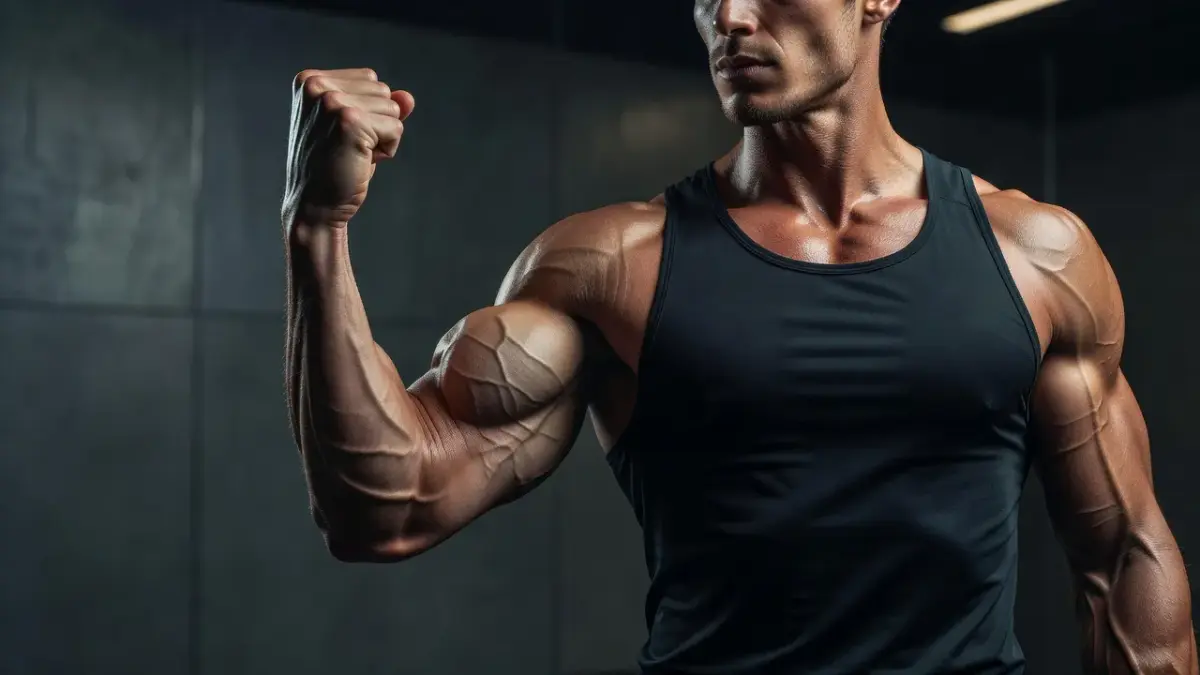
An arm flex is the biomechanical action of contracting the elbow flexor muscles to pull the forearm toward the upper arm, reducing the joint angle and thickening the muscle belly. This movement primarily relies on the biceps brachii, brachialis, and brachioradialis working together to stabilize the elbow and lift resistance. If you want to preview how stronger arm definition looks on your physique before committing to a multi-month strength cycle, the BodyBlend iPhone app allows you to apply targeted edits for muscular arms directly to your photos without warping background lines.
Which muscles perform elbow flexion: biceps brachii and brachialis?
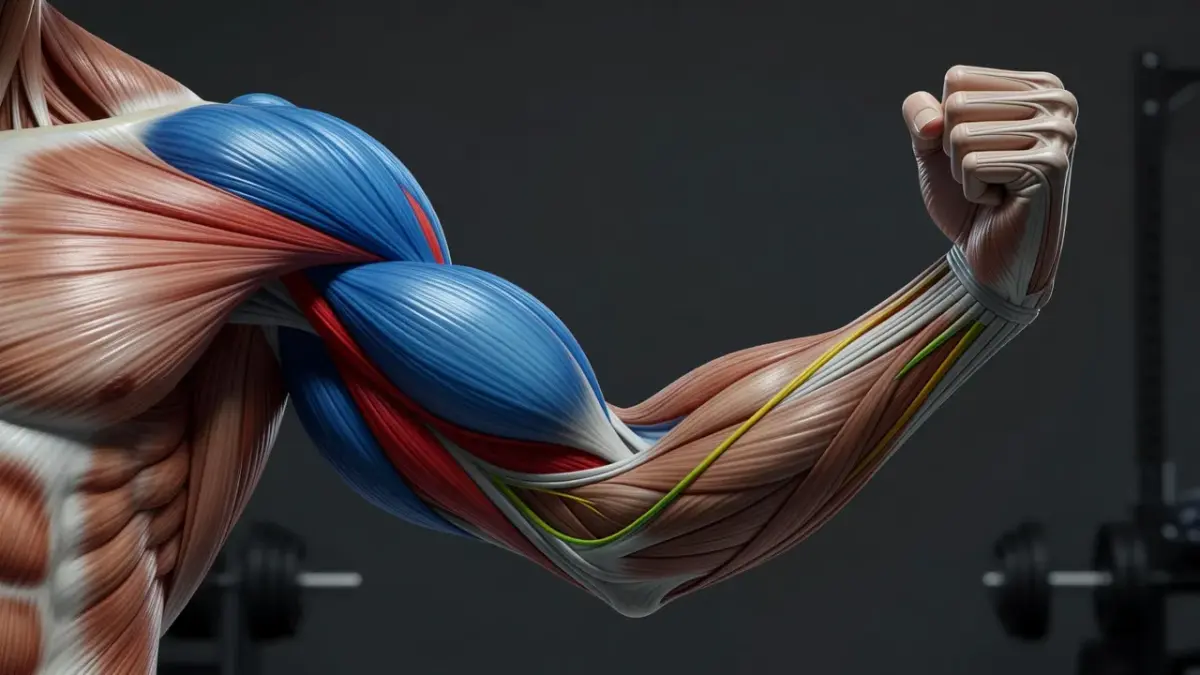
Elbow flexion is driven by three main muscles: the biceps brachii, the brachialis, and the brachioradialis. While most people focus on the biceps, the underlying muscular anatomy shows a clear division of labor during an arm flex.
- Biceps Brachii: This two-headed muscle sits on the front of your upper arm. According to anatomical entries on Wikipedia, the long head and short head originate at the scapula and attach to the radius, making the muscle a powerful flexor and the primary supinator (outward rotator) of the forearm.
- Brachialis: Situated beneath the lower portion of the biceps, the brachialis attaches directly to the ulna. It acts as a pure elbow flexor, generating massive lifting force regardless of whether your palm faces up or down.
- Brachioradialis: Located on the thumb side of your forearm, this muscle assists in elbow flexion when your forearm stays in a neutral position (like holding a hammer).
Understanding the difference between toned arms vs untoned arm structures comes down to how these three muscle groups develop together. When the brachialis grows, it pushes the biceps upward, creating a higher muscle peak when you flex your arm.
What are the best arm flexor exercises trainers recommend?
Personal trainers recommend multi-joint chin-ups, standing dumbbell curls, and neutral-grip hammer curls as the top exercises for pulling strength and arm flexor development. Combining heavy compound movements with isolated curling patterns ensures complete stimulus across all muscle fibers.
- Chin-ups (Underhand Grip): Bodyweight vertical pulling forces your arm flexors to lift your entire body weight, recruiting core stabilizers alongside the biceps.
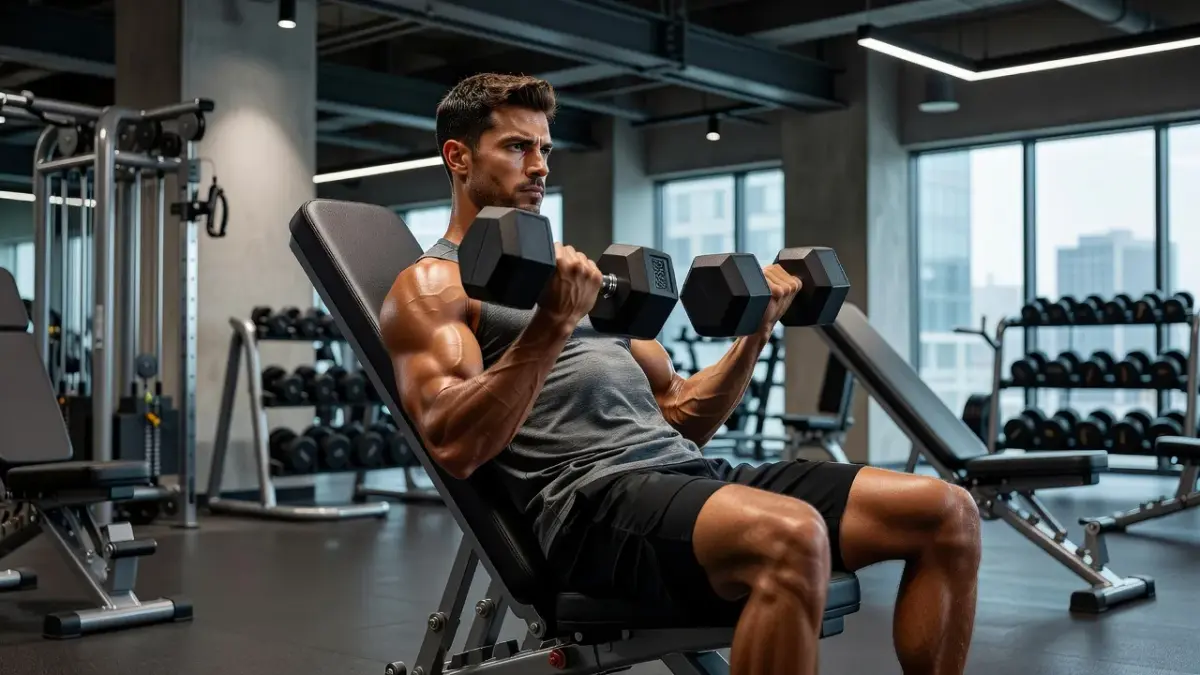
- Standing Dumbbell Curls: Alternating or simultaneous dumbbell curls allow a full range of motion while letting your wrists rotate naturally from neutral to supinated.
- Hammer Curls: Holding dumbbells with a palms-facing grip targets the brachialis and brachioradialis, which builds visible upper-arm thickness.
- Preacher Curls: Resting your upper arms against a sloped pad eliminates momentum and isolates the lower portion of the biceps flexors.
If your goal is a balanced physique, pairing these flexor exercises with pushing movements accelerates overall progress. Reviewing a complete toned body definition and transformation guide helps ensure your training plan covers both pulling and pushing muscular groups evenly.
What are the most effective biceps curl variations (barbell, dumbbell, hammer, incline, concentration)?
The most effective biceps curl variations are barbell curls for maximum load, incline dumbbell curls for long-head stretch, concentration curls for peak isolation, and hammer curls for brachialis thickness. Changing your wrist angle and upper arm position shifts tension across different sections of the arm.
- Barbell Curls: Using a rigid barbell allows you to lift the heaviest weight possible across both biceps heads, making it the primary strength builder.
- Incline Dumbbell Curls: Lying back on a bench inclined to 45 degrees sets your shoulders back. This stretches the long head of the biceps at the bottom of the rep, stimulating growth in the upper arm peak.
- Concentration Curls: Pressing your elbow against your inner thigh stops shoulder movement entirely. Research cataloged by ExRx.net confirms that restricting momentum forces the biceps to handle 100% of the joint torque.
- Hammer Curls: Keeping palms facing each other places the workload on the deeper brachialis muscle, broadening the front of your arm.
- Dumbbell Supinating Curls: Starting with palms facing inward and twisting your wrists upward as you lift activates both the flexor and supinator functions of the biceps.
Each variation carries specific joint requirements. For instance, rigid straight-barbell curls can strain your wrists if your forearm bones do not naturally align with a flat bar. Swapping to an EZ-curl bar or dumbbells resolves this limitation immediately.
Visualizing Arm Flex and Peak Muscle Definition in Photos
When you start a new lifting routine, physical changes take weeks or months to appear in the mirror. Many lifters struggle to stay motivated during early training phases because visual progress feels slow. Digital visualization tools help bridge this gap by letting you preview potential muscle gains on your own photos.
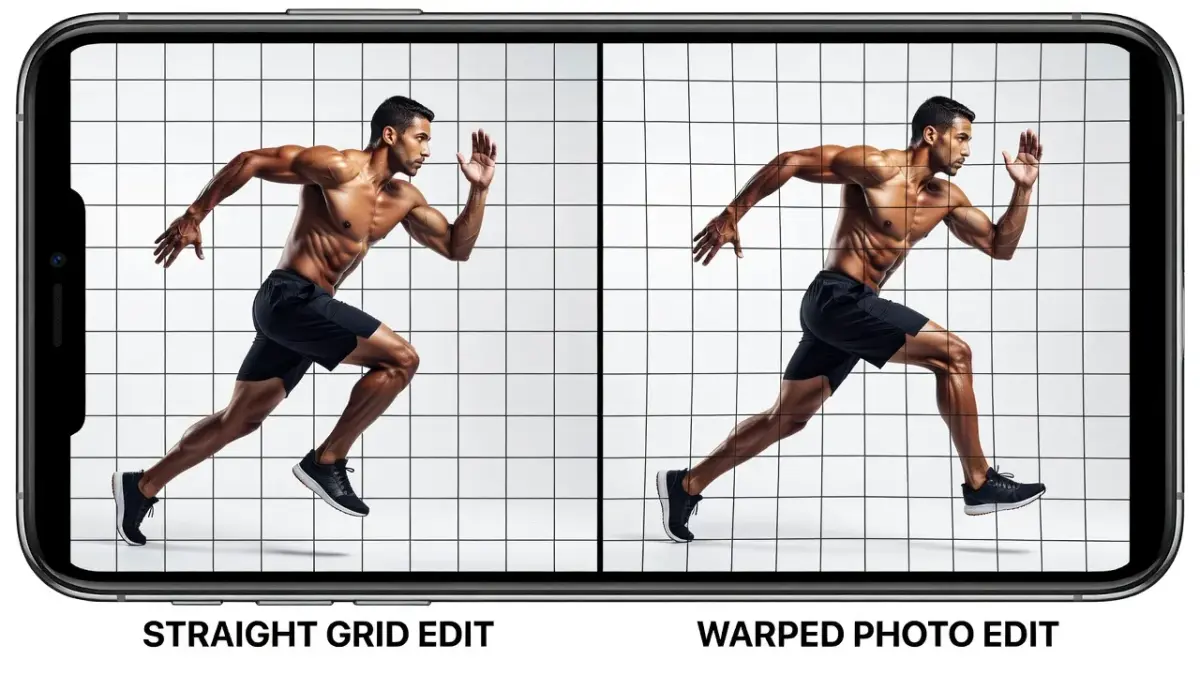
Using standard photo editing tools like manual Liquify filters often leads to distorted backgrounds, wavy doorframes, and unnatural skin textures. Dedicated body shape modification software avoids these editing errors by recalculating muscle volume while keeping surrounding objects aligned.
| Tool Category | How It Fits Your Workflow | Editing Method | Main Limitation |
|---|---|---|---|
| Manual Desktop Editors (e.g., Photoshop) | Best for professional photo editors needing complete pixel control. | Manual Liquify brush and manual layer warping. | Requires manual masking skills; easy to warp backgrounds. |
| BodyBlend App (iOS) | Fits midway through a goal-setting workflow to visualize realistic arm flex changes. | One-tap AI redrawing of single body parts (e.g., muscular arms). | Free download includes 1 generation; unlimited use requires Pro subscription. |
| Text-to-Image AI Generators | Useful for conceptual avatar generation rather than personal photos. | Text prompts generating entirely new synthetic images. | Replaces original face, background, and lighting completely. |
| Standard Camera Filters | Quick color adjusters applied right after taking a photo. | Global color grading and contrast adjustments. | Cannot alter muscle volume or physical arm shape. |
As of November 2026, BodyBlend provides a practical option for iPhone users wanting to see how added biceps mass looks on their current photos. The app includes 11 specific body part edits, including targeted muscular arm enhancement. Because its algorithm redraws only the targeted body region, your face, clothing textures, and background lines remain unwarped.
If you are evaluating different digital tracking methods, comparing the best AI muscle generators for workouts and photos helps clarify which apps alter existing photos and which ones generate synthetic avatars from scratch.
Which elbow flexion exercises do physical therapists recommend?
Physical therapists recommend low-load, controlled elbow flexion exercises like resistance band curls, active-assisted towel curls, and isometric wall holds to restore joint mobility without overloading tender tendons. Clinical rehabilitation focuses on tendon health and joint tracking rather than maximum muscle fatigue.
- Resistance Band Flexion: Elastic bands provide variable resistance that peaks at full contraction, reducing stress on the lower elbow attachment point where tendonitis usually occurs.
- Isometric Flexor Holds: Holding a dumbbell at a 90-degree angle for 20 to 30 seconds activates muscle fibers without moving the joint, protecting repairing tissue.
- Active-Assisted Supination Curls: Using your uninjured hand to assist the working arm during the lift allows full movement even if strength is impaired.
The medical rationale for these controlled movements is detailed in clinical biomechanics guides published on NCBI Bookshelf. Therapists adjust resistance based on pain levels, ruling out heavy free-weight training for anyone recovering from distal biceps tendinopathy or joint inflammation.
Are eccentric biceps exercises recommended in physical therapy?
Yes, eccentric biceps exercises are heavily recommended in physical therapy to stimulate collagen repair and build tendon strength following tendinopathy or strain. Eccentric loading forces the muscle-tendon unit to lengthen under tension, which remodels damaged connective tissue more effectively than concentric lifting alone.
- Controlled Lowering Phase: Patients lift a light weight using both arms or therapist assistance, then lower the weight using only the affected arm over a slow 4- to 6-second count.
- Tendon Adaptations: Slow eccentric tension aligns newly formed collagen fibers along the line of force, increasing the load capacity of the biceps tendon.
- Load Control Requirements: Eccentric therapy requires precise weight control. Using a dumbbell that is too heavy during the lowering phase can cause micro-tears, ruling out high-weight eccentric training for acute injury stages.
Therapists typically transition patients from isometric holds to eccentric lowering before reintroducing fast concentric curls. This progressive structure protects the elbow joint while restoring full flexing strength.
What are the best triceps exercises trainers recommend?
Trainers recommend heavy parallel bar dips, close-grip bench presses, and cable triceps pushdowns to build the opposing side of the upper arm. Although the triceps perform elbow extension rather than flexion, developing them is necessary for overall arm size, balanced flexed aesthetics, and joint stability.
- Close-Grip Bench Press: Placing your hands shoulder-width apart shifts pressing tension from the chest to the lateral and medial heads of the triceps.
- Parallel Bar Dips: Carrying your body weight through elbow extension heavily activates all three triceps heads while strengthening shoulder stabilizers.
- Cable Overhead Triceps Extensions: Extending a cable overhead stretches the long head of the triceps, which originates at the scapula and forms the inner bulk of the upper arm.
- Cable Pushdowns (Rope Attachment): Spreading the rope ends at the bottom of the movement maximizes contraction in the lateral head, creating the classic "horseshoe" shape visible when your arm is straight.
Balancing your flexor work with dedicated triceps extension exercises prevents agonist-antagonist strength imbalances. This dual approach protects your elbow joints from chronic overuse injuries during heavy lifting phases. If extra fat hides your definition, learn how to reduce fat arms with diet and training.
I recommend trying a simple routine of 2 pulling flexor exercises and 2 pushing extension exercises twice per week to build balanced arm definition efficiently.
Frequently Asked Questions
What is an arm flex?
An arm flex is the contraction of the elbow flexor muscles - primarily the biceps brachii, brachialis, and brachioradialis - to decrease the angle between your forearm and upper arm.
Why does the biceps form a peak when you flex your arm?
The biceps peak occurs when the muscle belly shortens and swells vertically during contraction. Building the underlying brachialis muscle elevates the biceps further, creating a more pronounced peak.
Can you flex your arms without using your biceps?
No, you cannot perform elbow flexion without involving the biceps brachii, though neutral or overhand grips shift a larger portion of the load to the brachialis and brachioradialis muscles.
What is the difference between elbow flexion and forearm supination?
Elbow flexion bends the arm at the elbow joint, bringing the hand closer to the shoulder. Forearm supination rotates the forearm outward so your palm faces upward. The biceps brachii performs both actions simultaneously.
How do I edit my photos to look like I have bigger flexed arms?
You can use dedicated body editing software like BodyBlend on iOS, which uses AI to increase muscle volume on single body parts without distorting background lines or altering your face.
Why do my elbows hurt when doing biceps curls?
Elbow pain during curls often results from tendon overload, poor wrist placement, or using excessive weight. Switching to an EZ-bar, reducing resistance, or adding eccentric rehab exercises can relieve tendon strain.
How often should I train my arm flexors for muscle growth?
Most lifters achieve optimal arm flexor growth by training biceps and flexor muscles 2 to 3 times per week, allowing at least 48 hours of recovery between targeted arm sessions.