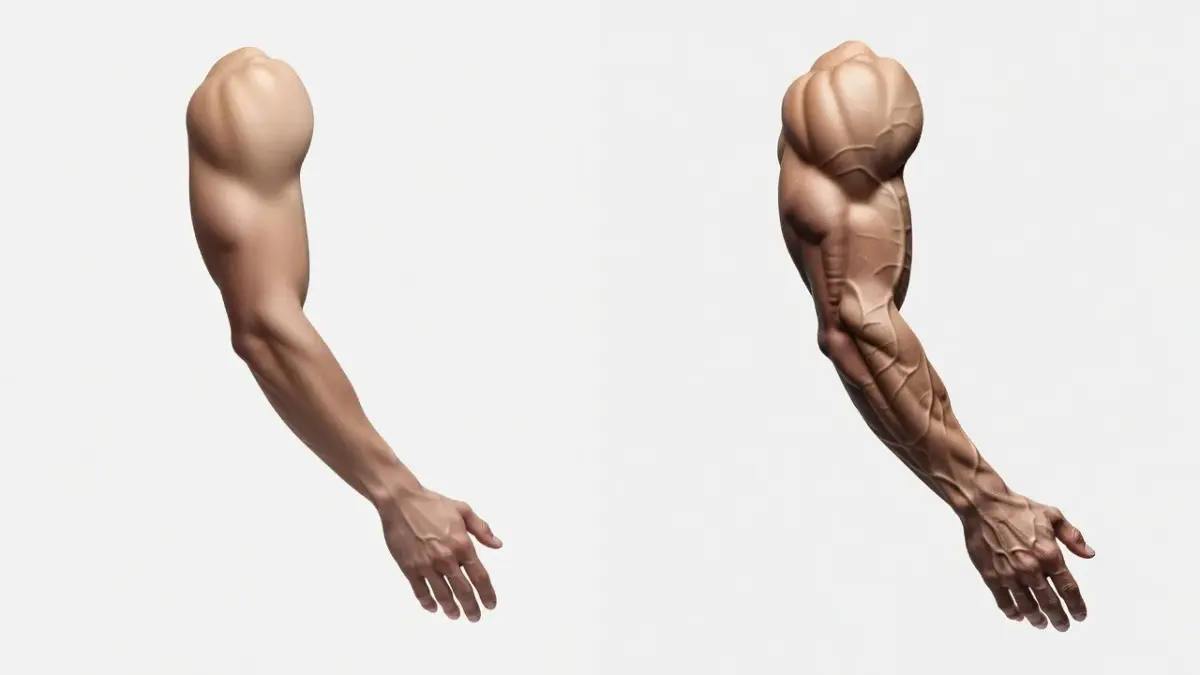
The visual difference between toned arms vs untoned arms comes down to muscle density and body fat percentage, which define whether muscles like the triceps, biceps, and deltoids appear distinct or soft. An untoned arm usually carries a higher layer of subcutaneous fat over relaxed muscular tissue, creating a smooth, rounded shape with minimal visible separation between the upper arm and shoulder. In contrast, a toned arm exhibits firm muscular definition, minimal skin sag when extended, and a clear visual line separating the shoulder cap from the bicep and tricep.
Understanding this difference matters whether you are setting long-term workout targets, tracking fitness progress, or attempting to preview how your physique will look in photos after a dedicated training program.
What are the key visual differences between toned arms vs untoned arms?
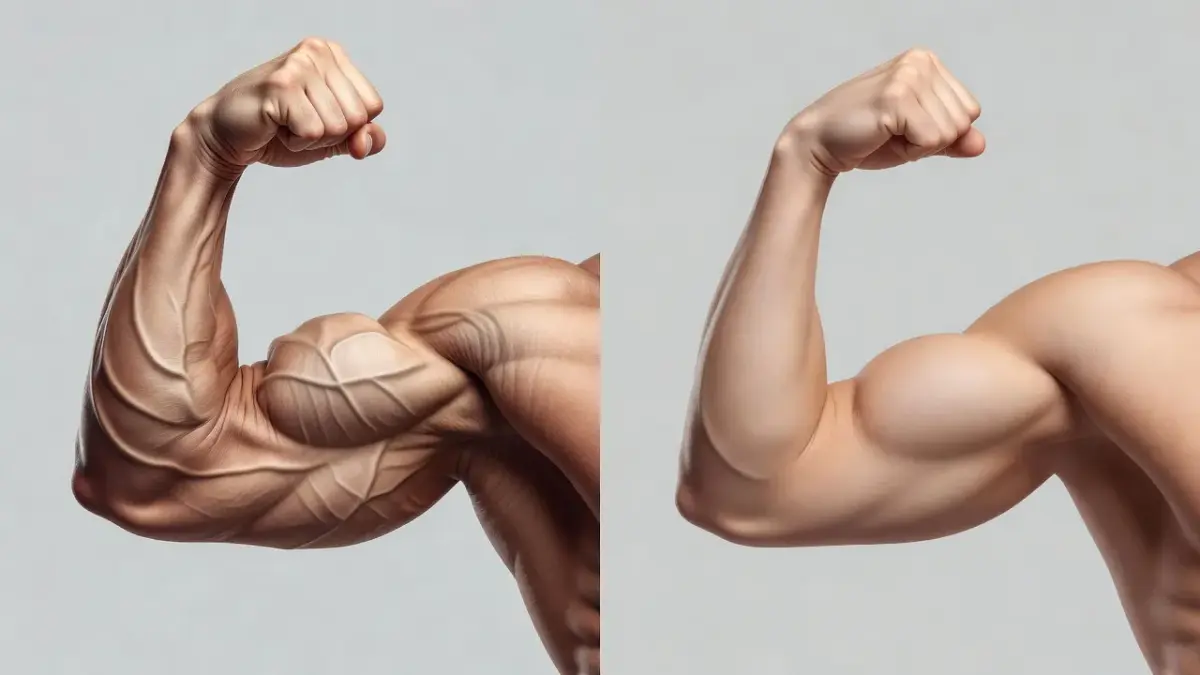
The primary visual markers of a toned arm are visible muscle curvature, firm skin tension, and a defined shoulder cap. When looking at an untoned arm, the perimeter line from the neck down to the elbow is mostly linear or slightly convex due to stored fatty tissue.
Here are the specific anatomical differences that change the visual profile of your upper arms:
- Deltoid separation: A toned arm features a clear crescent-shaped shadow where the shoulder muscle (deltoid) meets the upper arm. An untoned arm blends the shoulder directly into the bicep without a distinct boundary line.
- Tricep skin slack: When extended horizontally, an untoned tricep often sags toward the floor due to low muscle volume beneath the skin. A toned tricep forms a taut, horseshoe-shaped curve along the back of the arm.
- Bicep peak and vascularity: A toned arm displays a slight rise in the front bicep even at rest, whereas an untoned arm stays completely flat or uniform in thickness.
- Arm-to-torso clearance: Because muscle tissue sits tighter against the humerus bone than soft fat does, a toned arm creates a sharper visual separation from your chest and back in front-facing photos.
If you are currently evaluating your physical baseline before starting a workout routine, reviewing a complete toned body definition and science guide helps clarify how muscle mass directly alters photo silhouettes.
What exercises do trainers and fitness experts recommend for toned arms (triceps, biceps, shoulders)?
Fitness experts recommend multi-joint compound presses paired with targeted isolation moves that hit all three heads of the triceps, both heads of the biceps, and the lateral deltoids. Because the triceps account for roughly 60% of upper-arm volume, experts prioritize them over biceps to change the overall shape of the arm quickly.
To achieve balanced arm definition, trainers structure routines around three distinct muscle groups:
- Triceps (Back of Arm): Dips, overhead dumbbell extensions, and close-grip push-ups force the long and lateral heads of the triceps to firm up, eliminating underarm slack.
- Shoulders (Lateral Deltoids): Dumbbell lateral raises and overhead shoulder presses broaden the top of the arm, which instantly makes the waist look smaller and the arm look athletic.
- Biceps (Front of Arm): Hammer curls and incline dumbbell curls lengthen and heighten the front of the upper arm, giving it a crisp contour when flexed or bent.
I usually advise prioritizing lateral raises and overhead tricep work first. If your shoulder cap is flat, even a lean arm can look untoned in sleeveless shirts.
What does the American Council on Exercise recommend for arm strength and toning?
The American Council on Exercise (ACE) recommends triangle push-ups, tricep kickbacks, and dip movements as the single most effective exercises for isolating and toning the triceps. In a landmark exercise study commissioned by the American Council on Exercise, researchers used electromyography (EMG) testing to measure muscle activation across eight popular arm exercises.
The findings showed clear winners for muscle engagement:
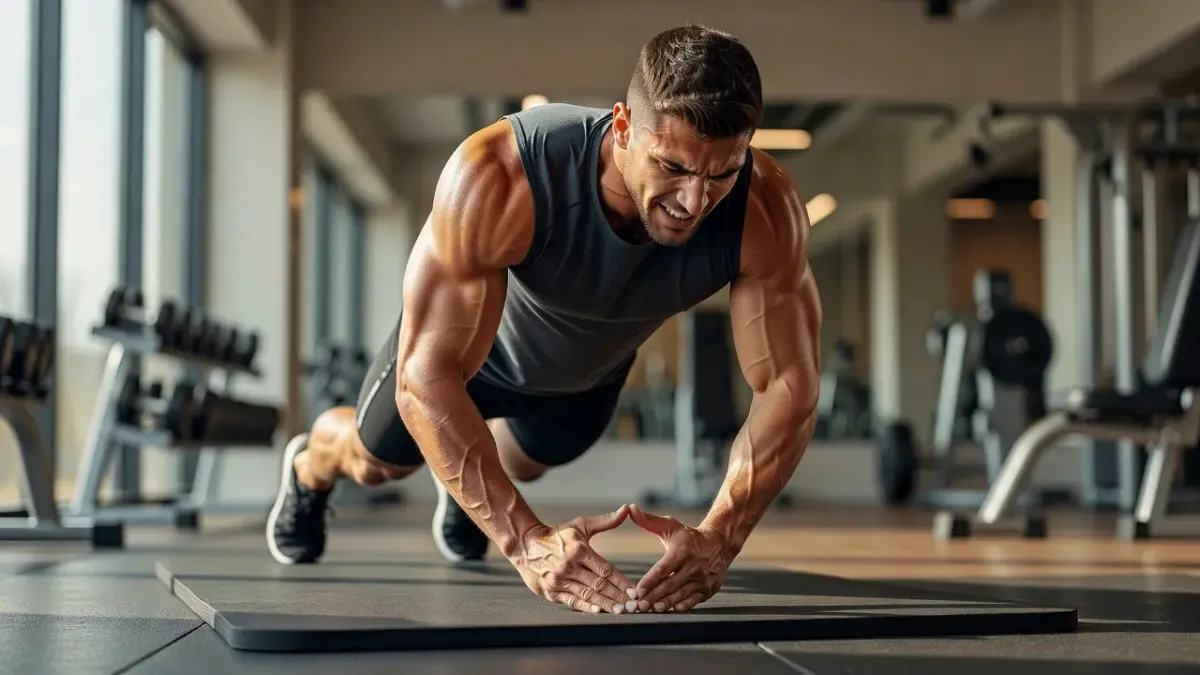
- Triangle (Diamond) Push-Ups: Ranked number one in total muscle activation, eliciting maximum contraction in the triceps compared to all other variations.
- Tricep Dips & Kickbacks: Followed closely behind diamond push-ups, providing superior isolation without requiring expensive commercial gym equipment.
- Bicep Activation: The study noted that concentration curls generated significantly higher muscle activity than standard barbell curls because they prevent momentum and cheating.
For anyone aiming to firm up untoned arms at home, incorporating diamond push-ups three times per week provides the fastest documented path to structural muscle activation.
What does Mayo Clinic recommend for arm toning exercises?
Mayo Clinic recommends integrating strength training exercises at least twice a week using resistance that fatigue the muscles within 12 to 15 repetitions. According to exercise guidance published by the Mayo Clinic, consistent strength work builds muscle mass, burns calories, and preserves bone density regardless of your age.
The core principles outlined by Mayo Clinic for safe, effective arm conditioning include:
- Proper form over weight: Using heavy weights with poor technique leads to joint strain rather than muscle tone. Focus on smooth, controlled lifts.
- Single set efficiency: Research cited by Mayo Clinic demonstrates that one well-executed set of 12 to 15 repetitions yields comparable strength gains to multiple sets for most fitness enthusiasts.
- Adequate recovery: Allow muscles at least 48 hours of rest between intense resistance sessions to let fibers repair and firm up.
Following these clinical guidelines ensures you build real strength while reducing the risk of tendinitis in your elbows and shoulders.
What role do progressive overload, resistance training, and cardio play in toning arms and losing arm fat?
Resistance training with progressive overload builds the underlying muscle structure, while cardio and nutritional management decrease the body fat layer covering that muscle. You cannot spot-reduce fat specifically from your arms; your body draws energy from stored fat globally based on genetics.
Understanding how these three training components work together prevents lost time in the gym:
- Progressive Overload: Gradually increasing weight, repetitions, or reducing rest times forces your arm muscles to adapt. Without progressive overload, an arm workout simply burns extra calories without creating firm muscle definition.
- Resistance Training: Lifting weights signals your body to retain lean tissue while in a calorie deficit. Without resistance training, weight loss causes you to lose both fat and muscle, leaving you with smaller but still untoned arms.
- Cardiovascular Exercise: Steady-state cardio or high-intensity interval training (HIIT) increases your daily energy expenditure, making it easier to maintain the calorie deficit required to shed fat from upper arms.
If your goal is to visually inspect how your arm muscle mass would look at lower body fat percentages, checking out specialized gym AI tools and body visualizer apps offers a helpful way to set realistic physical benchmarks.
4 Ways to Visualize or Edit Toned Arms in Photos (Compared)
When setting personal fitness goals or creating content for social media, seeing how your body looks with altered arm tone provides immediate feedback. Many people rely on visualizers before committing to a 12-week workout plan or simply want to clean up photos where poor lighting makes firm arms look soft.
Below, I evaluate four primary methods used to transform untoned arms into defined, athletic arms in photographs as of October 2026.
| Feature / Metric | AI Body Shape Editors | Manual Liquify Apps | Desktop Editing (Photoshop) |
|---|---|---|---|
| Execution Speed | Under 5 Seconds | 3 to 10 Minutes | 15 to 30 Minutes |
| Background Preservation | Automatic (Zero Warping) | Frequent Warping | Manual Masking Required |
| Learning Curve | Beginner (One-Tap) | Intermediate (Manual Sliders) | Advanced (Professional Skills) |
| Best Tool / Standard | BodyBlend | Facetune | Adobe Photoshop 2026 |
| Cost Structure | Free Trial / Subscription | Subscription with Ads | $22.99/mo (Adobe Plan) |
Option 1: AI Body Shape Editors (Best for Instant, Realistic Previews)
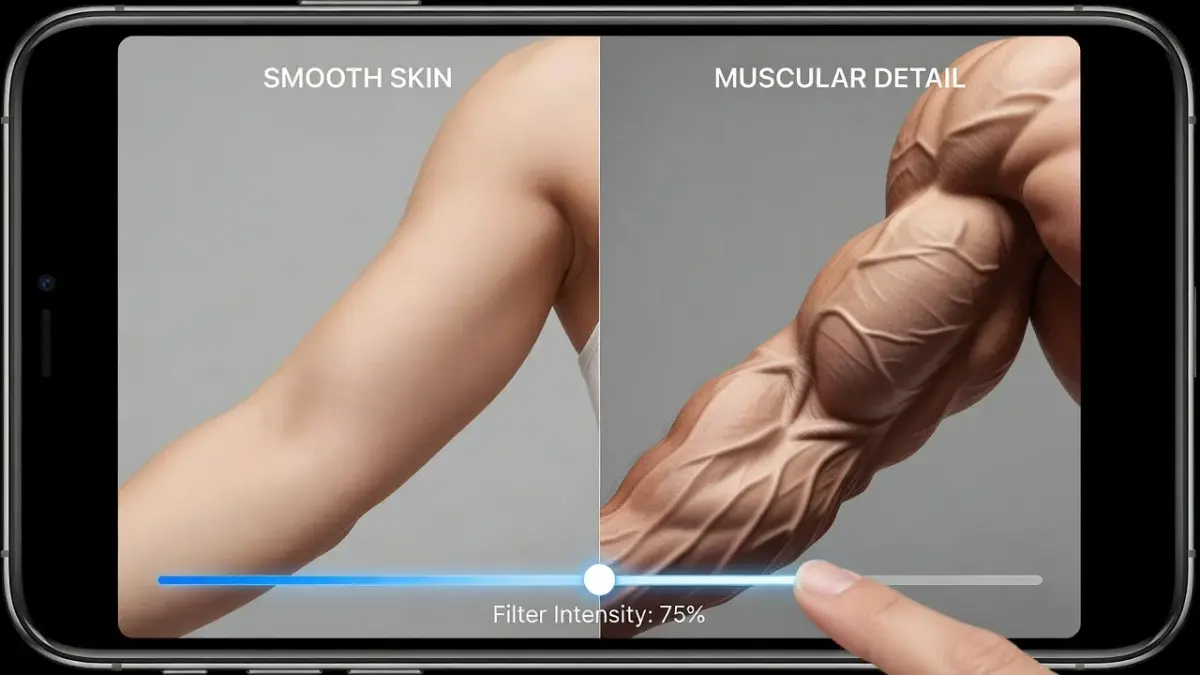
AI body shape editors process original photos using deep learning models to alter muscle definition while maintaining natural background geometry. Unlike traditional stretch filters, advanced AI tools recognize arm anatomy, automatically placing subtle shadows around the deltoids and flattening soft tricep areas.
For users who want to visualize workout results without learning graphic design software, AI body editors offer the most reliable path. They generate realistic muscle contours on your real skin tone, keeping tattoos, watch straps, and background textures intact.
Option 2: Manual Liquify & Retouch Apps
Manual retouch apps allow you to push, pull, and warp specific pixel areas using touch controls on your smartphone screen. By pinching the lower boundary of an upper arm inward, you can quickly shrink the appearance of untoned arm fat.
However, manual warping has a major limitation: background distortion. Straight lines like door frames, tiles, or gym equipment bend inward along with your arm, making edits obvious. While these apps offer fine control over specific spots, achieving realistic muscle separation requires patience and an steady hand.
Option 3: Professional Desktop Editing (Photoshop)
Desktop photo editing software provides pixel-perfect control over arm size, lighting shadows, and background isolation. Using Photoshop's Liquify tool alongside frequency separation, professional editors can carve out detailed bicep contours, add highlights to shoulder caps, and completely isolate background layers to eliminate warping.
The trade-off is time and skill. Achieving a natural look takes significant software experience, proper tablet hardware, and up to half an hour per photo. For casual users who simply want to check their fitness goals or post a clean beach picture, desktop editing presents a steep learning curve.
Option 4: 3D Fitness Body Mesh Visualizers
3D fitness visualizers create generic digital avatars based on your height, weight, and neck-to-waist measurements. These tools render a 3D model that expands or shrinks as you move numerical sliders for body fat and muscle volume.
While useful for tracking raw weight loss trends, 3D mesh visualizers do not use your real photos. You view a stylized mannequin rather than your actual face, lighting, and wardrobe, making them less ideal for personal social media posts or authentic goal setting.
How BodyBlend Helps You Visualize Toned Arms Realistically
When you want to see what your arms would look like after months of consistent resistance training, standard warping filters often let you down by distorting your background. BodyBlend addresses this challenge using AI trained specifically on human anatomy to redraw muscle contours cleanly.
Available on iOS via the App Store, BodyBlend gives you a realistic preview of your fitness potential directly on your existing photos.
| Capability | Manual Warp Apps | BodyBlend AI Editor | Generic Avatar Renderers |
|---|---|---|---|
| Uses Real Personal Photos | Yes | Yes | No (Generic Mannequin) |
| One-Tap "Muscular Arms" Preset | No (Manual Dragging) | Yes (Dedicated Arm Edit) | No |
| Preserves Background Lines | No (Warping Common) | Yes (Smart Background Lock) | N/A |
| Muscle Definition Realism | Low (Stretched Pixels) | High (AI Shadow Generator) | Medium (3D Texture) |
| Free Option Available | Limited Features | 1 Free Generation Included | Free with Ads |
1. Dedicated Single Body Part Edits
Rather than changing your entire body shape, BodyBlend includes 11 targeted single body part edits—including a specific muscular arms feature. If you are generally happy with your torso but want to convert untoned upper arm sags into a sculpted bicep and shoulder cap, you can isolate that edit with a single tap.
2. Zero Background Warping
The most frustrating part of manual photo editing is warping nearby objects. If you snap a progress photo in front of gym mirrors or tiled walls, pushing your arm inward distorts those straight lines. BodyBlend keeps your background, clothes, skin tone, and face completely unchanged while adjusting body shape underneath, ensuring edits look natural.
3. Built-In Before & After Comparison
Tracking physical changes requires clear visual benchmarks. BodyBlend includes an intuitive before-and-after slider that lets you compare your current baseline photo against the AI-generated toned version side by side. You can instantly save the output directly to your camera roll to stay motivated throughout your fitness journey.
If you are currently exploring different editing approaches, reading a broader breakdown of the best AI muscle generator tools can help you decide which feature set best fits your workflow.
Posing and Lighting Tips to Make Arms Look Toned in Photos
Even without digital editing or months of weight training, smart camera positioning dramatically alters how firm your arms appear in photographs. If your arm is pressed flat against your side, soft tissue flattens outward, making toned arms look untoned instantly.
Try these practical posing techniques during your next photoshoot:
- Lift the arm off your torso: Hold your arm 2 to 3 inches away from your waist or place your hand gently on your hip. This prevents your tricep from pressing against your ribs and expanding outward.
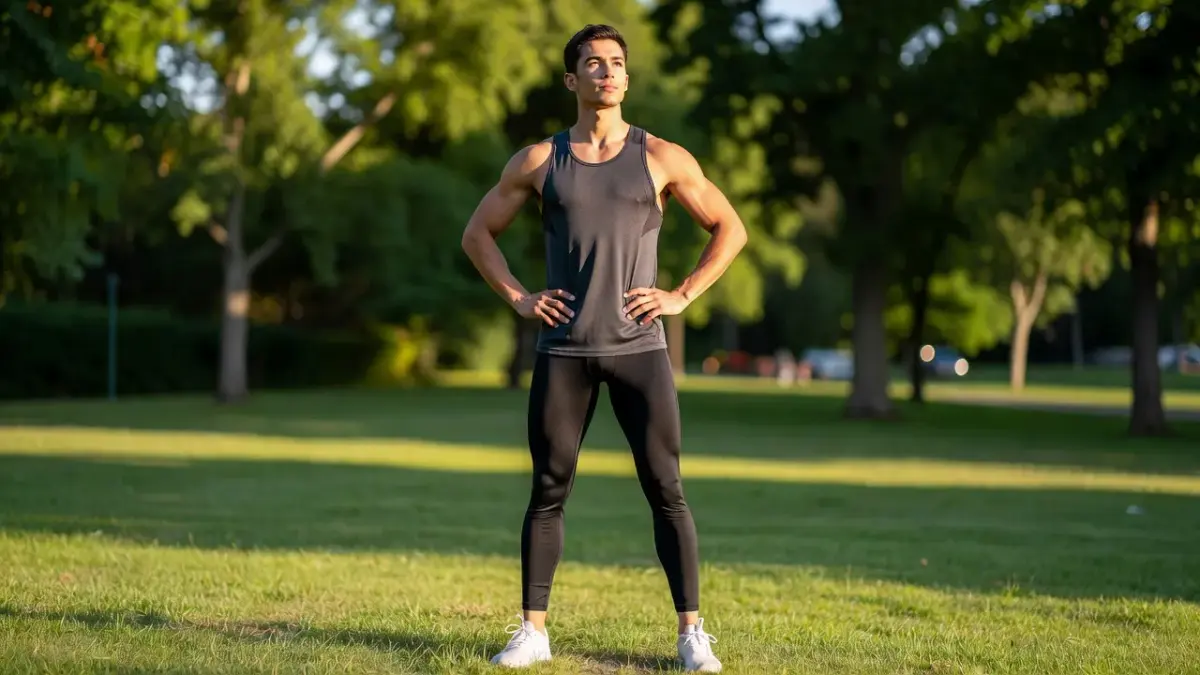
- Angle your shoulder toward the lens: Turn your body at a 45-degree angle to the camera rather than facing straight ahead. Resting your weight on your back leg creates a longer visual line along your arm.
- Use overhead directional light: Soft, direct lighting from above creates natural shadows underneath the shoulder cap and tricep line, highlighting subtle muscle definition that disappears under flat ring lights.
- Bend your elbow slightly: Keeping your arm bone-straight makes muscles look flat. Introducing a slight 15-degree flex in your elbow engages both the bicep and forearm muscles naturally.
If you want more detailed positioning advice for social media, explore our guide on how to look thinner in pictures using proven posing tips for practical camera angles.
Which Arm Transformation Path Should You Choose?
Choosing the right path depends on whether you are looking for long-term health changes, quick photo edits, or visual motivation to hit the gym.
- Choose Resistance Training (ACE & Mayo Clinic Protocols): If your ultimate goal is long-term physical health, higher metabolism, and functional strength, commit to diamond push-ups, dips, and progressive lifting 2 to 3 times per week. Expect visible natural results in 8 to 12 weeks.
- Choose AI Photo Editing (BodyBlend): If you want to visualize your end goal on your real body right now, or if you want to polish your favorite vacation photos without background warping, use an automated AI editor. It takes under five seconds to generate clean arm definition.
- Choose Camera Angle & Posing Adjustments: If you need an immediate boost for today's photo post without software downloads, step away from flat lighting, lift your elbows away from your torso, and angle your shoulders toward the lens.
Combining consistent strength training with reliable visualization tools keeps your fitness goals clear, measurable, and achievable.
Frequently Asked Questions
How long does it take to turn untoned arms into toned arms?
Most people see noticeable arm definition within 6 to 12 weeks of consistent strength training combined with a slight calorie deficit. Beginners often notice firmer muscle tone within the first month as neural adaptations improve muscle engagement.
Can you tone your arms without lifting heavy weights?
Yes, bodyweight exercises like push-ups, tricep dips, and plank shoulder taps effectively build muscle definition. The American Council on Exercise highlights diamond push-ups as one of the most effective exercises for tricep activation without equipment.
Why do my arms look untoned in photos even though I work out?
When your arm is pressed flat against your body, subcutaneous fat and relaxed muscle flatten outward against your torso. Lifting your arm slightly off your body and using directional lighting instantly restores natural muscle definition in pictures.
Is it possible to lose arm fat without losing weight overall?
No, spot reduction of fat in specific body parts is biologically impossible. To lose fat on your arms, you must lower your overall body fat percentage through a combination of nutritional management, cardio, and resistance training.
How does an AI body editor make arms look toned without blurring the photo?
Advanced AI body editors analyze human anatomical structures to recognize muscle boundaries. Instead of dragging pixels outward, the AI redrawn muscle highlights and shadows on your arms while locking background elements in place to prevent warping.
What is the fastest exercise to tone the back of the arms?
According to EMG research by the American Council on Exercise, triangle push-ups generate the highest muscle activation in the triceps, followed by tricep dips and kickbacks.
Are biceps or triceps more important for getting toned arms?
Triceps are more important because they make up approximately 60% of upper-arm volume. Building the triceps firms up the large underarm area where slack skin and soft fat tend to settle.