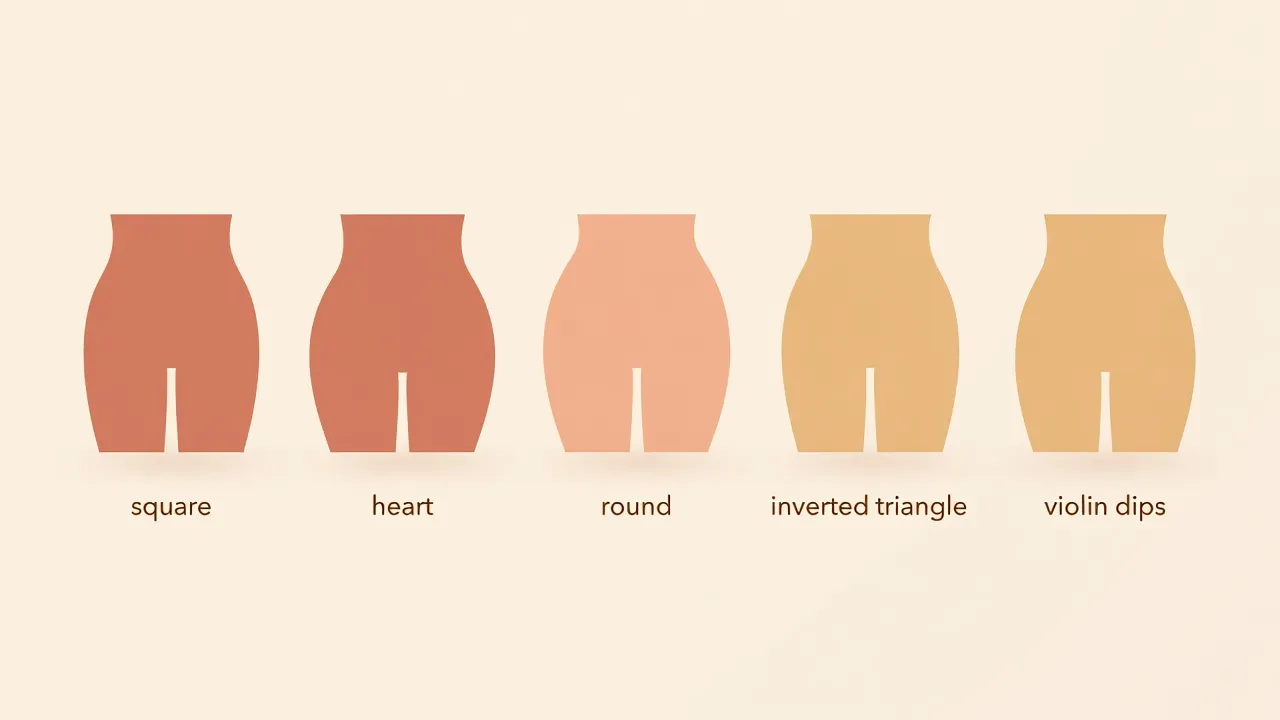
The five primary types of hips are square (H-shape), heart (A-shape), round (O-shape), inverted triangle (V-shape), and violin hips (hip dips). Your specific hip silhouette is determined by the bone width of your pelvis, the angle of your femoral head, and where your body naturally stores subcutaneous fat. Understanding which hip structure you have prevents you from wasting months trying to exercise away an immutable skeletal frame.
What most people get wrong is confusing pelvic width with glute muscle volume. You can build muscular glutes through resistance training, but no amount of squats will alter the horizontal distance between your iliac crests. Trying to force your body into a completely different skeletal category through restrictive dieting usually results in frustrated effort rather than structural change.
Here is a quick overview of how the five structural types of hips break down anatomically and visually:
| Hip Shape Type | Pelvic Frame Width | Primary Fat Distribution | Key Visual Marker | Best Fitness Target |
|---|---|---|---|---|
| Square (H-Shape) | Equal width between ilium and outer thigh | Evenly along waistband and upper thigh | Straight vertical lines from waist to hip | High gluteus medius hypertrophy |
| Heart (A-Shape) | Wider at trochanter (lower hip), narrow waist | Lower gluteal and upper thigh region | Tapers inward toward the waistline | Balanced overall lower-body training |
| Round (O-Shape) | Soft, curved iliac wings with balanced frame | Uniform layer across hips and buttocks | Soft circle without sharp skeletal angles | Overall body recomposition |
| Inverted Triangle (V-Shape) | Broad iliac crest, narrower femur angle | Upper hip, lower stomach, lower back | Angles downward toward the groin | Lower gluteus maximus isolation |
| Violin (Hip Dips) | High iliac crest with wide trochanter gap | Top of hip and upper thigh, gap at midline | Inward indentation below the hip bone | Targeted side-glute volume |
What determines your hip shape?
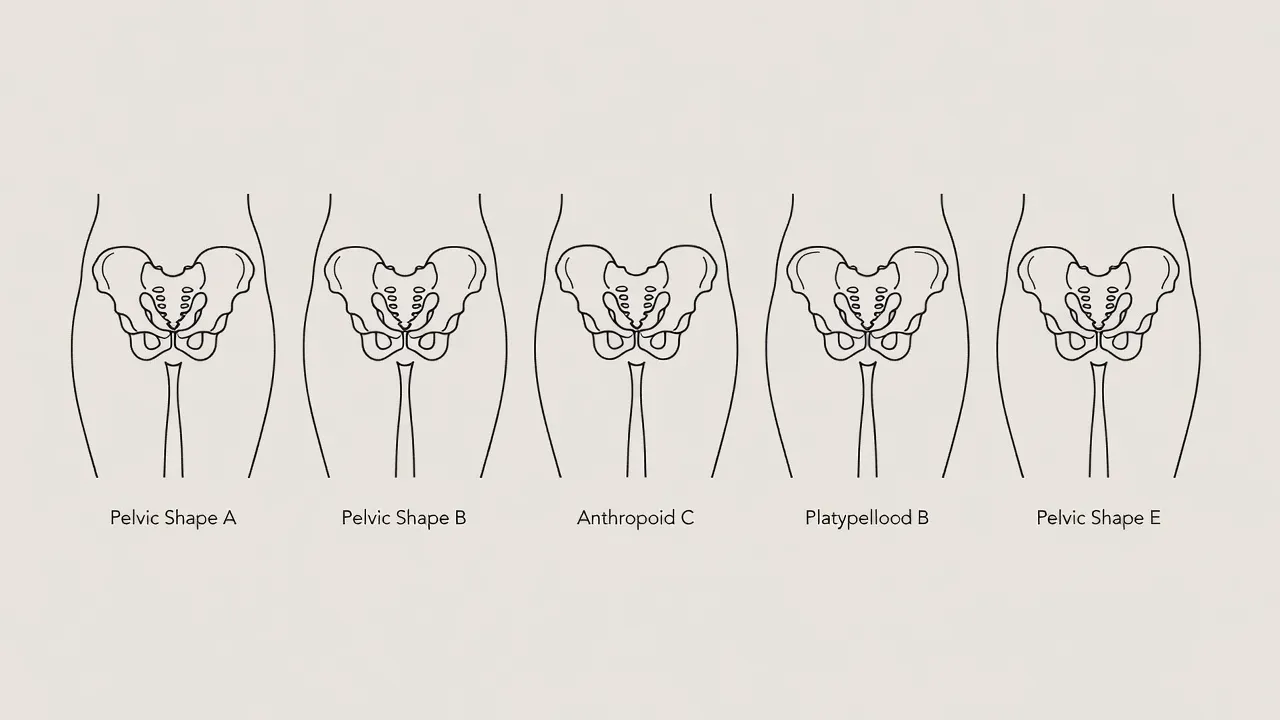
Your hip shape is primarily dictated by your pelvic anatomy and genetic fat distribution patterns. The width of your iliac crest (the top edge of your hip bone), the distance to your greater trochanter (the top of your thigh bone), and the vertical length of your pelvis create the structural blueprint for your lower body.
According to medical resources on pelvic anatomy from Cleveland Clinic, the biological structure of the pelvis varies significantly among individuals due to hormonal and genetic factors. This means two people with identical body fat percentages can have completely distinct hip outlines.
| Factor | Components |
|---|---|
| Pelvic Structure | Iliac Crest Width + Greater Trochanter Distance |
| Fat & Muscle Distribution | Subcutaneous Storage + Gluteus Medius/Maximus Volume |
| Final Hip Outline | Square, Heart, Round, Inverted Triangle, or Violin |
Pelvic Structure determines Fat & Muscle Distribution, which in turn determines Final Hip Outline.
As detailed in anatomical overviews on the ilium bone on Wikipedia, the flare of your upper hip bones sets the top boundary of your silhouette. Fat storage over these bones acts as the soft-tissue overlay, filling out or accentuating your natural bone structure.
1. Square (H-Shape) Hips
Square hips feature a straight line down from the upper hip bone to the outer thigh with little taper at the waist. If your iliac crest sits directly above your greater trochanter in vertical alignment, your lower body naturally forms a rectangular or H-shaped profile.
Why do square hips form?
This shape happens when the ilium and the femoral head sit at nearly equal widths. Subcutaneous fat in H-shaped hips tends to distribute evenly along the waistband rather than concentrating purely on the outer sides or lower glutes.
How to approach square hips in photos and fitness
People with square hips often try to chase a deep hourglass curve through aggressive dieting, which only makes the bone structure more prominent. I prefer focusing on building the outer glute muscles (gluteus medius) to add volume to the mid-hip area.
When taking before and after photos for fitness tracking, a straight-on angle highlights the square outline. Turning your hips 45 degrees toward the camera creates an instant visual curve without distorting your actual proportions.
2. Heart (A-Shape) Hips
Heart-shaped hips curve outward below the waist and reach their widest point at the lower buttocks and upper thighs. This creates an inverted heart or pear silhouette that tapers inward toward a narrower midsection.
Why do heart hips form?
Heart hips stem from a narrower upper pelvic frame paired with wider placement of the greater trochanters. Research on body fat distribution on NCBI notes that estrogen-driven fat storage preferentially deposits tissue around the lower pelvic region and subfemoral areas.
Trade-offs and styling points
- Strengths: Creates a dramatic waist-to-hip ratio naturally without needing heavy muscle hypertrophy.
- Drawbacks: Finding pants that fit both the narrow waist and wide lower hips can be difficult.
- Visual tip: High-waisted bottoms align with the narrowest part of your torso to emphasize the lower hip sweep.
3. Round (O-Shape) Hips
Round hips distribute volume evenly across the entire pelvis, creating a smooth circular curve from the waist to the upper thigh. This structure lacks sharp angles or straight vertical lines.
What causes an O-shaped hip profile?
Round hips occur when you have a wider, flared iliac crest combined with a soft, uniform layer of subcutaneous fat over the hip bones. The transition from the lower ribcage past the waist down to the thigh follows a continuous arc.
If you are working toward a balanced, toned body, a round hip structure provides a sturdy base. Muscle growth in the gluteus maximus enhances the projection without altering the smooth frontal curve.
Visualizing your ideal hip shape in photo editing
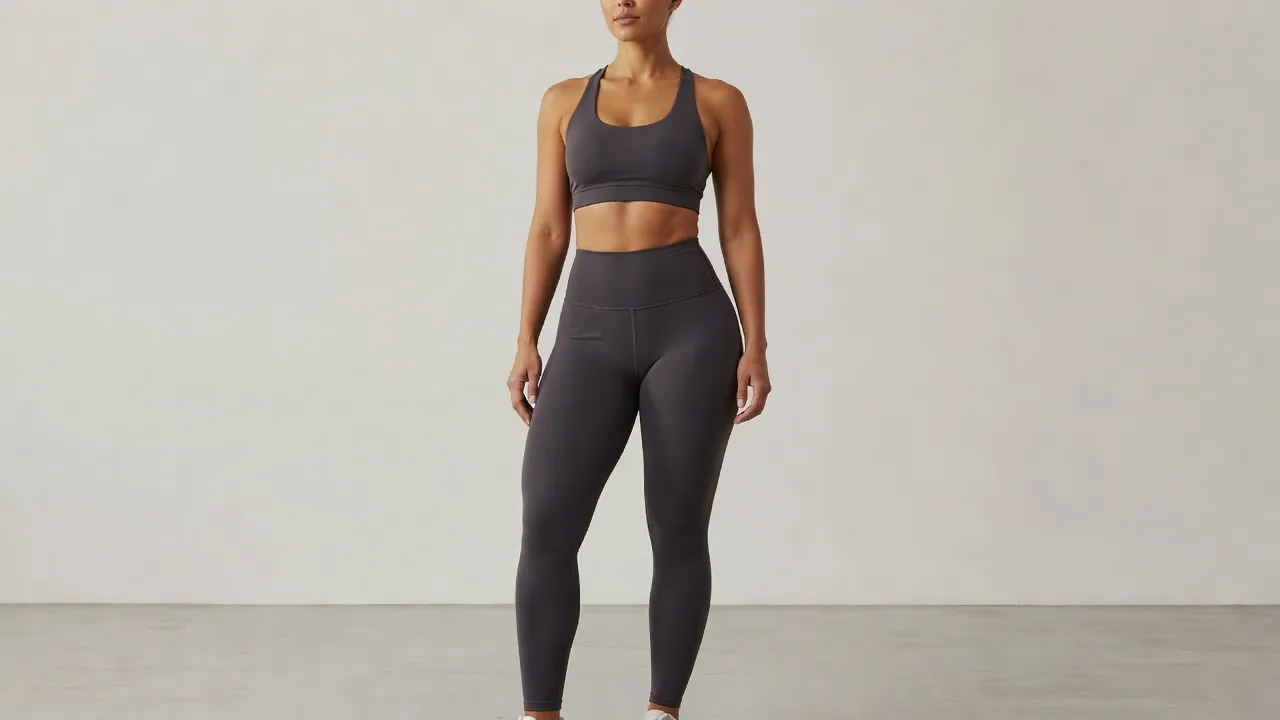
When setting personal body goals, it is helpful to preview how your proportions would look before starting an intense workout plan. Manual editing tools and liquify sliders in traditional photo apps often bend background walls, warp floor tiles, and alter background objects into unnatural shapes.
If you want to visualize structural changes on your own photos clean and fast, using an AI-based tool saves significant time. The BodyBlend AI body editor lets you select from 17 preset body shapes or targeted body edits to adjust your waist-to-hip balance.
| Manual Liquify Sliders | Bodyblend AI Engine |
|---|---|
| Warped background | Straight background |
| Distorted skin tone | Preserved skin tone |
| Blurry edges | Sharp clothes edges |
| Manual brush strokes | One-tap shape preset |
Unlike manual editing apps that smudge pixels, BodyBlend redraws your lower body outline while keeping your face, skin tone, clothing textures, and background perfectly intact. You can try a free edit on the BodyBlend App Store page to test how different hip curves complement your current frame.
4. Inverted Triangle (V-Shape) Hips
Inverted triangle hips are wider at the top along the iliac crest and taper inward toward the groin and lower thighs. This creates an angled V-shape when viewed from the front.
What creates the V-shaped hip structure?
This profile is common when the upper pelvic bone is wide, but the lower hip area holds minimal fat storage. It is also frequently associated with lower estrogen levels or higher shoulder-to-hip structural ratios.
Fixing common fitness misconceptions
- The mistake: Attempting to remove fat from the upper hip to "straighten" the V-shape.
- The reality: You cannot remove the upper pelvic bone. Fat loss in this area makes the bone more noticeable.
- The fix: Focus on hypertrophy of the lower glutes and hamstrings to build volume lower down, balancing the upper skeletal width.
5. Violin Hips (Hip Dips)
Violin hips have an inward dip or indentation in the space between the iliac crest and the greater trochanter. This secondary curve resembles the inner waist of a violin body.
Are hip dips normal?
Yes, hip dips are a completely normal skeletal pattern. As of October 2026, fitness consensus widely acknowledges that hip dips are governed by the vertical distance between your upper hip bone and your thigh joint.
If that gap is high and wide, skin and muscle tuck inward toward the bone, creating visible depressions on the sides of your legs.
Can you get rid of hip dips?
No exercise can completely eliminate high-gap skeletal hip dips. Gluteus medius exercises can add muscle volume beneath the dip to smooth the transition, but the structural indentation will remain to some degree because of your bone placement.
For related details on lower body outlines, check our guide on the anatomical types of buttocks.
Comparing Hip Shapes vs. Goal Visualization Methods
If you are aiming to adjust your appearance for fitness goals or social media photos, here is how different visualization and editing methods compare:
| Visualization Method | Preserves Background? | Effort Required | Realistic Anatomy output? | Cost / Terms |
|---|---|---|---|---|
| Manual Photoshop Liquify | No (Warps easily) | High (Requires skill) | Depends on user skill | Subscription fee |
| BodyBlend AI App | Yes (Keeps lines straight) | Low (One tap) | High (Trained AI presets) | Free download (1 free edit) |
| AI Prompt Generators | No (Changes face/clothes) | Medium (Prompt tweaking) | Low (Generates new person) | Varies per tool |
| Fitness Posing Techniques | Yes | Medium (Posing practice) | High (Real photo angle) | Free |
How to measure your hips accurately
To measure your hips accurately, wrap a flexible tape measure around the widest point of your buttocks and hips. Standing with your feet together ensures your pelvic structure sits in a neutral, natural alignment.
Here is the step-by-step process for getting consistent hip measurements:
- Locate the landmark: Find the top of your hip bone (iliac crest) and the widest curve of your lower hips.
- Keep the tape level: Ensure the measuring tape stays parallel to the floor all the way around your body.
- Stand naturally: Do not suck in your stomach or flare your hips outward; stand straight with your weight distributed evenly.
- Record without tension: Pull the tape snug against your skin without compressing your soft tissue.
Checking your numbers every 4 to 6 weeks gives you a clear picture of true body composition changes, rather than day-to-day fluid fluctuations.
Frequently Asked Questions
What are the main types of hip shapes?
The five primary types of hip shapes are square (H-shape), heart (A-shape), round (O-shape), inverted triangle (V-shape), and violin hips (hip dips). These shapes are determined by your skeletal pelvic structure and genetic fat storage patterns.
Can workouts change your natural hip shape?
No, exercise cannot change your underlying pelvic bone structure or widen your iliac crest. Resistance training can enlarge your gluteal muscles (gluteus maximus, medius, and minimus) to alter the volume and fullness of your lower body, but your fundamental skeletal outline remains the same.
Why do I have hip dips?
Hip dips (violin hips) occur when there is a high vertical distance between your iliac crest and your greater trochanter. This gap causes the skin and muscular overlay to curve inward toward the bone, creating a natural indentation on the side of your hip.
How do I know if I have square or heart-shaped hips?
Square hips show a straight vertical line from the upper hip bone down to the outer thigh with very little taper at the waist. Heart-shaped hips taper inward toward a narrow waist and curve outward to reach their widest point at the lower glutes and upper thighs.
What is the rarest hip shape?
The inverted triangle (V-shape) hip is considered less common in younger women, as fat distribution typically shifts higher toward the waist and torso after menopause or with significant hormonal changes.
Does losing weight remove hip dips?
Losing body fat usually makes hip dips more pronounced rather than removing them. As subcutaneous fat decreases over the hip bone and thigh, the underlying skeletal gap between the ilium and femur becomes more visible.
Can an AI app show how I would look with a different hip shape?
Yes, AI body editing apps like BodyBlend allow you to select different preset body shapes or targeted body edits on your own photos. The AI redraws your silhouette to show realistic goal previews while keeping your background, skin tone, and clothing natural.