The best AI fitness models in 2026 are BodyBlend for seeing your goal body on your own photo, plus Fitbod, Freeletics, Tempo, Tonal or Whoop for the coaching. Every coach here models your workouts and recovery, not your body, so none of them shows you what "done" looks like.
BodyBlend redraws your own photo into a target shape like Fit or Ripped and keeps your face, clothes and background (so the goal still looks like you). Pick Fitbod for the gym, Freeletics if you have no equipment, Tempo or Tonal for home lifting, and Whoop for recovery.
I run a coach every day of a training block and open BodyBlend on day one and at each 4-week check-in. So I judged each tool on one question: does it tell me what to do today, or show me where I'm headed?
Which AI fitness models are worth using in 2026?
Six tools earned a spot. Five handle training or recovery, and one handles the visual goal. The order follows the workflow: plan the training, see the target, then pick the hardware or wearable if your budget allows it.
| # | Tool | What it models | Where it fits in your workflow | Hardware needed | Price (as of late 2026) |
|---|---|---|---|---|---|
| 1 | Fitbod | Your next gym session, from logged history and muscle recovery | Daily: building each workout | None (phone, gym equipment) | $15.99/month or $95.99/year on its App Store listing |
| 2 | BodyBlend | Your goal body, drawn on your own photo | Day one and every check-in: seeing the target | iPhone, iPad | Free download with one generation; Pro $9.99/week or $14.99/month (varies by country) |
| 3 | Freeletics | Bodyweight and HIIT plans that adapt to your feedback | Daily: training without a gym | None | Subscription, varies by plan length |
| 4 | Tempo Studio | Your form and reps via 3D sensors | Daily: guided home lifting | Tempo cabinet with weights | Hardware plus a monthly membership |
| 5 | Tonal | Resistance load, adjusted rep by rep | Daily: home strength training | Wall-mounted Tonal unit | Hardware plus $59.95/month membership |
| 6 | Whoop | Recovery and strain from heart data | Every morning: deciding how hard to go | Whoop strap | Annual membership tiers |
If you want a deeper look at photo tools specifically, I compared them in my roundup of AI body editor apps.
Is the Fitbod AI workout app any good?
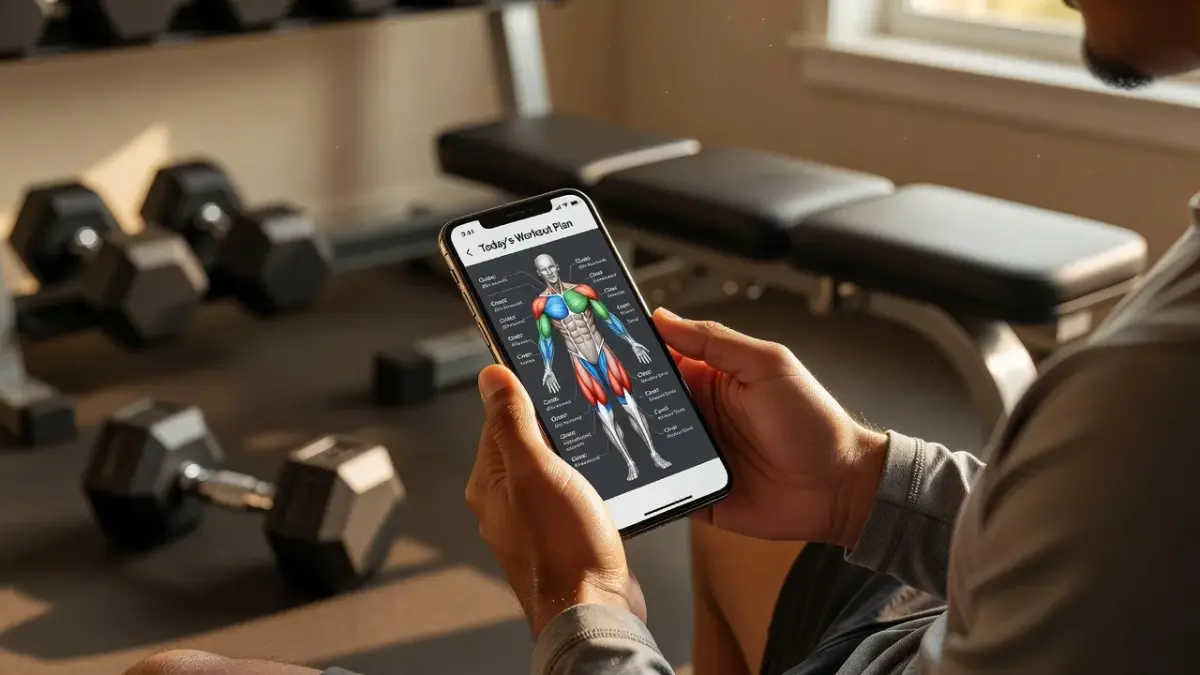
Yes, Fitbod is the best pure gym-programming app I've used, as long as you log every set honestly. It builds each workout from three inputs: what equipment you have, what you lifted last time, and which muscles are still recovering. That last part shows up as a body map that greys out fatigued muscle groups.
Why it made the list:
- It applies progressive overload for you, nudging weight or reps up when your logs show you're ready.
- It syncs with Apple Watch, so you can log sets without picking up your phone.
- It handles home gyms well. Tell it you only have dumbbells and a bench, and it won't program a barbell squat.
The trade-off: Fitbod only knows what you type. If you skip logging for a week or guess your weights, the recommendations drift. At $15.99 a month it also costs more than a basic logging app, so it's worth it only if you follow its plans and don't just use it as a notebook.
Which AI fitness model shows your goal body on your own photo?
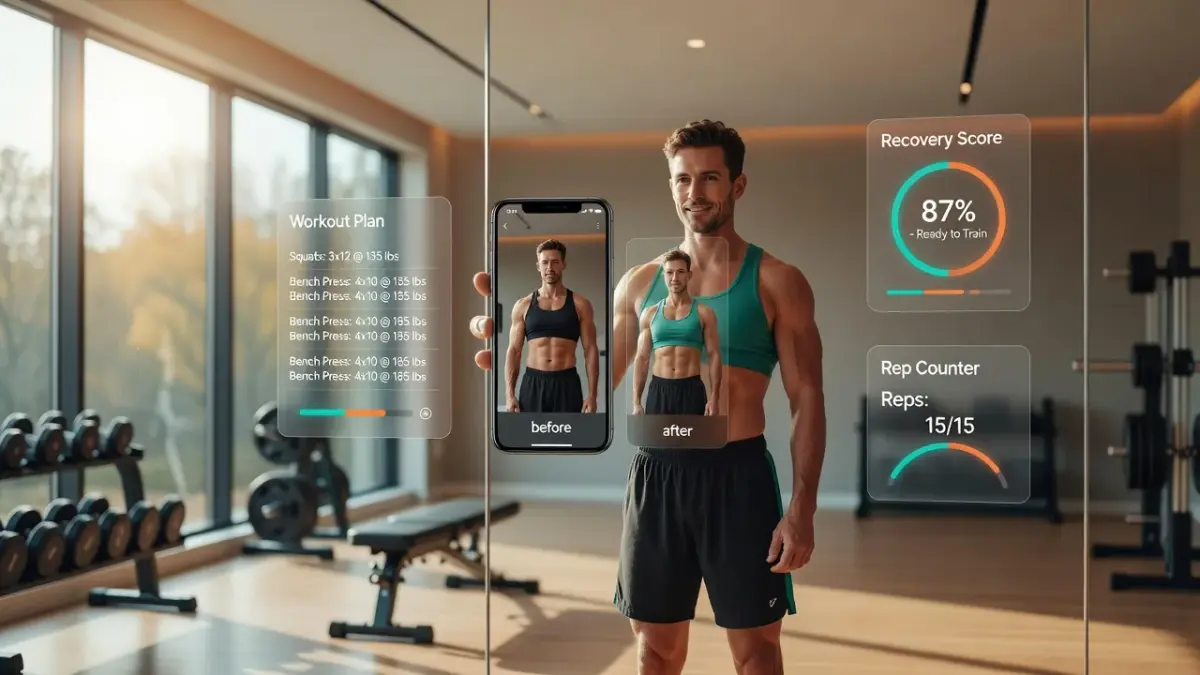
BodyBlend does this: upload a photo, pick a target body shape, and it generates a reshaped version of your body in one tap. This is the step the coaching apps skip. Fitbod can tell you to hit 4 sets of incline press, but it can't show you what your chest and shoulders might look like 16 weeks from now.
I use it at the start of every training block, and three features make the difference:
- 17 preset body shapes: Fit, Muscular, Ripped, Slim, Hourglass, Curvy and more, set up separately for men and women. I pick the one that matches the plan I'm actually running. "Fit" works for a cut and "Muscular" for a lean bulk.
- 11 single body part edits: if your goal is narrow, like visible abs, a smaller waist or bigger arms, you can change only that part instead of the whole frame. The edits stack, so you can combine visible abs with muscular arms.
- Face, skin tone, clothes and background stay the same: only the body gets redrawn, so the door frame behind you stays straight. That's the giveaway that ruins most edited gym photos, and it's why the result reads as you rather than a stranger.
Then I use the before & after view and save both images to Photos. The pair goes into a folder next to my check-in photos.
The trade-off: the image shows a direction, not a deadline. How long it takes to get there depends on your training and diet, which is where the other five tools come in.
On pricing, the download is free and includes one free generation. After that it needs BodyBlend Pro, generally $9.99 a week or $14.99 a month, with exact prices by country on the App Store listing. If you want a goal picture before you commit to a plan, start there. For muscle-specific previews, I also tested other AI muscle generators for workouts and photos.
How good is the Freeletics AI coach?
The Freeletics Coach is the strongest option if you train with bodyweight and no gym. After each session it asks how hard the workout felt and how your technique held up, then adjusts the next one. The Freeletics Wikipedia entry traces the company to Munich in 2013, and its high-intensity bodyweight roots still show in the programming.
Why it made the list:
- Workouts need no equipment, so it works in a hotel room or a small apartment.
- The adaptation is visible. Rate a session as too easy and the next one gets harder.
- Sessions can be short, which suits a weight-loss phase on a busy schedule.
The trade-off: if your goal is serious muscle size, bodyweight-only training runs out of road. I'd use Freeletics for a cut or a restart, then move to Fitbod or a weights-based setup for a bulk.
Is Tempo Studio a good AI fitness coach?
Tempo Studio is a good coach for home lifters who want form feedback, but it only makes sense if you're paying for the full hardware setup. The cabinet uses 3D sensors to track your movement, count reps and flag form problems in real time. Then it recommends weights for your next set based on how the last one went.
Why it made the list:
- Live form correction is the one thing phone apps can't match. A camera that sees your squat depth beats an app that trusts your log.
- Real weights are included, so it trains you for strength the way a gym does.
- Class-style guidance helps if you lose focus training alone.
The trade-off: you're buying furniture and a membership on top of it. If you already have a gym membership, Fitbod gives you most of the programming for a fraction of the cost.
Is the Tonal AI coach worth buying?
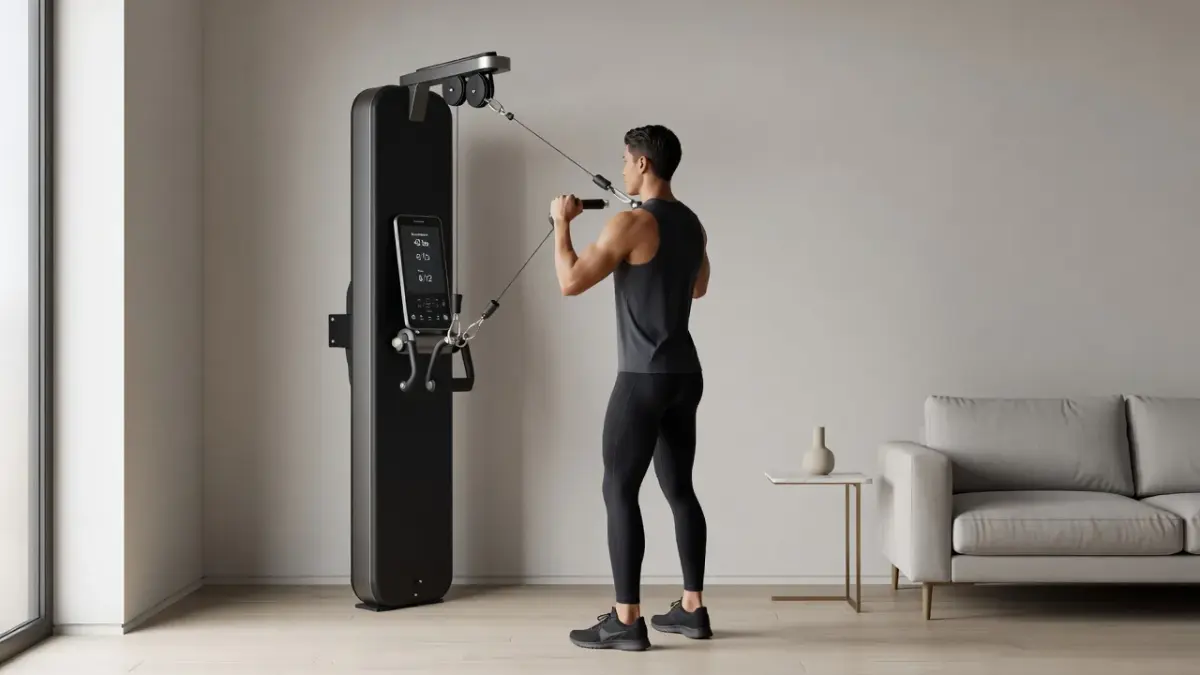
Tonal is worth buying only if you'll strength-train at home at least three times a week for years. It's a wall-mounted unit that swaps plates for digital resistance (up to 200 pounds). Its software adjusts the load rep by rep, adding weight when you're moving well and pulling it back as you fail.
Why it made the list:
- Spotter mode: it reduces the load when you stall, which makes solo heavy sets safer.
- Eccentric mode: it adds resistance on the lowering phase, a hypertrophy technique that's hard to do with free weights alone.
- Automatic progression: the strength score and load tracking replace manual logging.
The trade-off: price. Tonal's own pricing puts the Tonal 2 well above $4,000 before the $59.95 monthly membership. That's a gym membership for years. I'd only buy it if you hate commuting to a gym badly enough that it's the reason you skip workouts.
How does Whoop AI coaching use recovery data?
Whoop's AI coach reads your overnight heart data to score recovery from 0 to 100%, then tells you how much strain to take on that day. The score leans heavily on heart rate variability, plus resting heart rate, respiratory rate and sleep. Whoop Coach, which the company launched in 2023 with OpenAI's models, lets you ask plain questions like "Should I lift heavy today?" and answers from your own data.
Why it made the list:
- It's the only tool here that tells you when not to train hard, which matters in an aggressive cut when sleep and recovery tank.
- It pairs with any of the others. I wear it while Fitbod writes the workouts.
- Since the 2025 relaunch, membership comes in tiers rather than one flat plan, according to the Whoop company entry on Wikipedia and Whoop's own site.
The trade-off: Whoop doesn't write workouts the way Fitbod does. It's a recovery advisor, not a program, so on its own it won't change how you look.
How do you pair a goal photo with an AI coach?
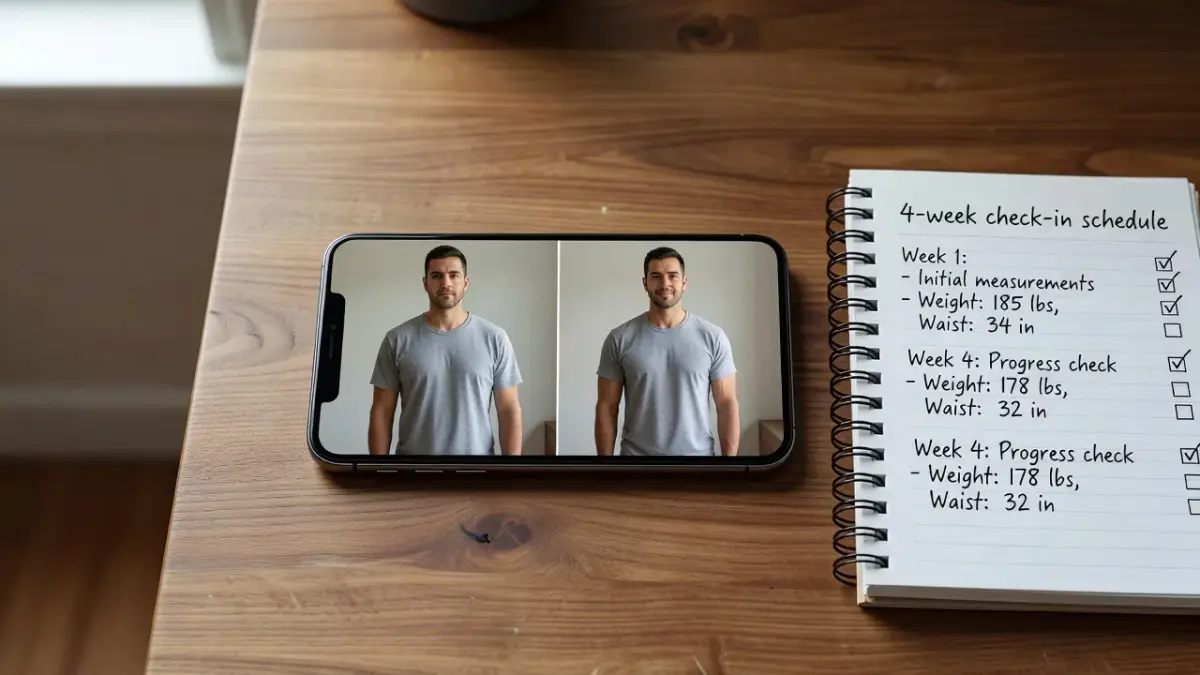
Use the photo to set the target and the coach to set the pace, then check both every four weeks. My setup takes about 20 minutes on day one:
- Take a baseline photo: same spot, same lighting, relaxed posture. I covered the details in my guide to timing and tracking a fitness transformation.
- Generate the goal version: pick the preset that matches your plan (Fit for a cut, Muscular for a bulk) and save the before & after pair.
- Choose one coaching app: Fitbod for a gym, Freeletics for no equipment, Tempo or Tonal if you've bought the hardware.
- Add Whoop if you're cutting hard: low recovery scores are your early warning to pull back.
- Re-shoot every 4 weeks: compare the real photo against the goal image, not against your memory.
How fast can you realistically reach the goal in the photo?
For fat loss, plan on 1 to 2 pounds a week. That's the pace the CDC's guidance on losing weight calls gradual and steady. For a personal estimate, the NIH Body Weight Planner calculates calories against a target date.
| Fat to lose | Weeks at 2 lb/week | Weeks at 1 lb/week |
|---|---|---|
| 10 lb | 5 | 10 |
| 20 lb | 10 | 20 |
| 30 lb | 15 | 30 |
If your goal image would take 30 weeks at this pace, that's useful to know on day one. It beats quitting at week six because the mirror hasn't caught up.
Frequently Asked Questions
What are AI fitness models?
AI fitness models covers two things. The first is coaching software (Fitbod, Freeletics, Tonal) that models your training and recovery. The second is image tools that show a fitter version of your body on a photo. There are also fully virtual influencers, like Miquela, which are characters rather than tools.
Can AI make me look fit in a photo?
Yes. AI body editors can redraw your body in a photo as more toned or muscular. The better ones keep your face and background unchanged, so the result still looks like you rather than a pasted-on body.
Is it okay to post AI-edited fitness photos on social media?
It's fine to post them, but label them as edits or goal images. Presenting an AI-edited body as real progress, especially when selling coaching or supplements, misleads people. Meta's apps may also add an AI label to content they detect as edited.
Can ChatGPT build a workout plan instead of a fitness app?
ChatGPT can write a solid starting plan if you give it your equipment, schedule and goal. What it won't do is track your logged sets and auto-adjust the next session the way Fitbod does, unless you paste your history in every time.
Which AI fitness app is free?
Most have a free tier or trial and then charge a subscription. Freeletics and Fitbod limit free use, and Tonal, Tempo and Whoop all need paid memberships. BodyBlend is free to download and includes one free generation.
Do AI fitness coaches replace personal trainers?
Not fully. AI coaches handle programming, progression and tracking well. A human trainer still beats them at fixing technique in person, adjusting around injuries and keeping you accountable when motivation drops.
How accurate is an AI preview of my future body?
Treat it as a target, not a forecast. Genetics, where you store fat and how consistently you train decide the actual result. Comparing real check-in photos against the goal image every few weeks keeps your expectations honest.