
Muscle fat refers to the ratio and distribution of lean muscle tissue relative to adipose (fat) storage within your body, which directly shapes your physical physique. While traditional fitness advice treated losing fat and building muscle as two completely separate phases, modern exercise physiology proves you can alter this ratio simultaneously through body recomposition. If you want to visualize how altering your muscle-to-fat balance will look on your specific body frame before altering your workout routine, our iPhone app BodyBlend lets you apply target body edits directly onto your personal photos without distorting the background.
Visualizing body composition: standard photos vs. AI physique modeling
Tracking changes in your body composition using traditional bathroom scales often fails because scales cannot distinguish between fat loss, water retention, and skeletal muscle growth. A person can drop five pounds of pure body fat while gaining five pounds of lean muscle tissue, resulting in zero net change on the scale despite a dramatic change in mirror appearance.
Outdated progress-tracking relied solely on body mass index (BMI) calculations or tedious caliper skinfold testing. As of November 2026, modern body visualizers offer a clear preview of your target physique before you commit to months of strict diet and resistance training.
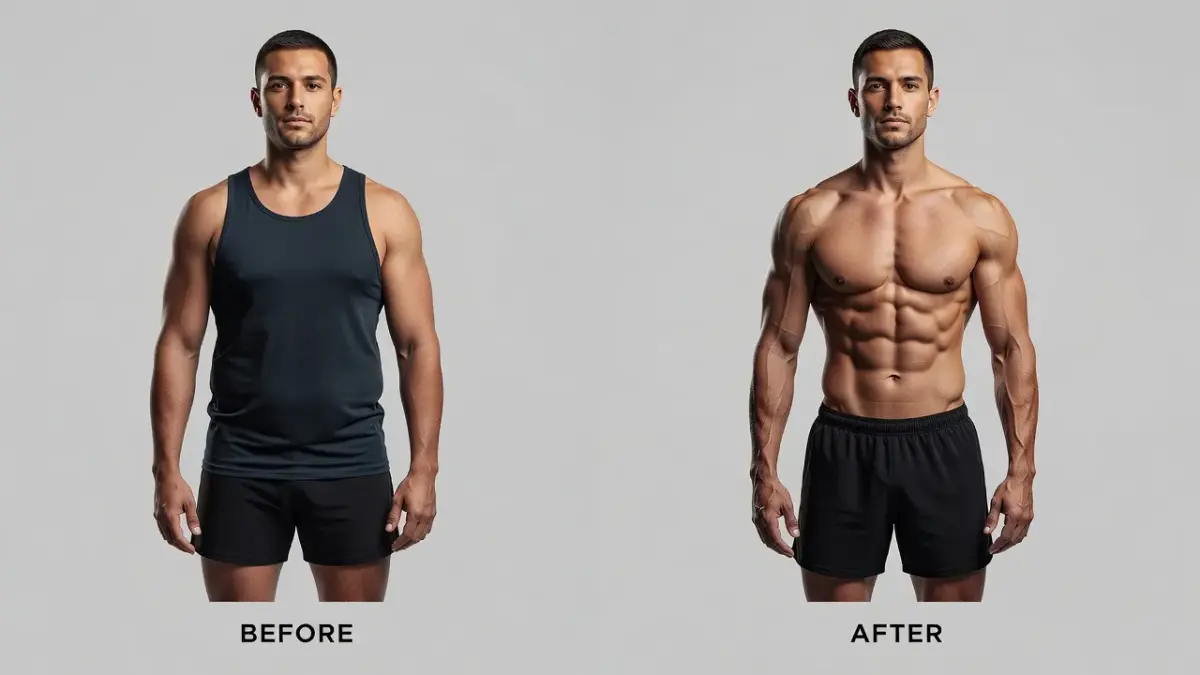
If you are setting long-term training goals, seeing a realistic target helps sustain motivation through lengthy deficit phases. Rather than relying on generic cartoon avatars or complex desktop software, BodyBlend uses single-tap AI transformation algorithms tailored specifically for iOS. You can select from 17 preset body shapes (including Muscular, Fit, and Ripped parameters) or apply 11 single body part edits like visible abs or enhanced arm definition. The generative model preserves your original facial features, skin tone, clothing textures, and background structure, completely eliminating the blurred walls common in older photo tools. Exploring different best AI body editor apps can help you decide which visual planning method matches your current regimen.
Can you build muscle and lose fat at the same time through body recomposition?
Yes, you can build skeletal muscle while simultaneously burning body fat through body recomposition, provided you maintain a sufficient protein intake and follow progressive resistance training. For decades, the dominant fitness dogma stated that muscle growth required a calorie surplus (bulking), while fat burning required a calorie deficit (cutting).
Exercise scientists now confirm that stored body fat provides the necessary energy to fuel muscle protein synthesis even when your dietary intake is below maintenance levels. This dual process occurs most rapidly in three specific populations:
- Beginners who have not yet adapted to weight training stimuli.
- Individuals returning to training after a long layoff (utilizing muscle memory).
- People carrying a higher initial body fat percentage, which provides abundant internal energy reserves.
Even trained athletes can experience simultaneous muscle gain and fat reduction, though their rate of muscle growth will be slower than a novice lifter's. Understanding your exact training priorities - such as deciding between lean muscle vs bulk muscle goals - allows you to structure your energy intake and training volume to match your frame.
How much protein per kg is needed for muscle hypertrophy?
To maximize muscle hypertrophy during fat loss or maintenance, you need between 1.6 and 2.2 grams of protein per kilogram of body weight per day (0.7 to 1.0 grams per pound). Consuming protein within this window provides enough amino acids to repair micro-tears in muscle fibers while keeping your body in a positive nitrogen balance.
The International Society of Sports Nutrition (ISSN) explicitly detailed these targets in their comprehensive protein position stand. They noted that athletes in an active energy deficit may require elevated intakes between 2.3 and 3.1 grams per kilogram of fat-free mass to prevent tissue catabolism.
If your daily intake falls below these threshold levels during a diet, your body breaks down existing muscle tissue to supply amino acids for essential metabolic functions. Spreading your target protein evenly across three to five distinct meals throughout the day optimizes muscle protein synthesis spikes far better than eating your daily allocation in a single evening meal.
What do ISSN and ACSM position stands recommend for resistance training and hypertrophy?
Both the International Society of Sports Nutrition (ISSN) and the American College of Sports Medicine (ACSM) recommend targeting all major muscle groups 2 to 3 times weekly using multi-joint compound exercises. The old approach of working a single muscle group once a week until total exhaustion is far less effective for natural lifters than distributing that volume over multiple sessions.
The official exercise guidelines published by the American College of Sports Medicine emphasize several core tenets for optimizing lean tissue growth:
- Focus heavily on multi-joint movements like squats, deadlifts, chest presses, and rows to engage maximal muscle mass.
- Lift across a mechanical spectrum of 60% to 80% of your 1-rep maximum (1RM) for hypertrophic development.
- Allow adequate recovery intervals of 48 to 72 hours for specific muscle groups before re-stimulating them.

Adhering to these evidence-based standards helps lower the risk of joint overuse injuries while keeping muscle protein synthesis consistently elevated. For step-by-step guidance on transforming your frame safety, review our breakdown on toned body definition and transformation.
Body composition strategies: standard cut vs. recomposition vs. bulk
The table below breaks down the key operational differences, caloric targets, and expected monthly changes across the three main physique strategies.
| Strategy Metric | Caloric State | Protein Target | Fat Loss Speed | Muscle Gain Speed | Best Suited Candidate |
|---|---|---|---|---|---|
| Body Recomposition | Maintenance to -10% Deficit | 1.6 - 2.2 g/kg | Moderate (0.5 lb/week) | Moderate (0.5 - 1 lb/month) | Beginners, High Body Fat, Returning Lifters |
| Traditional Cut | -15% to -25% Deficit | 2.0 - 2.6 g/kg | Fast (1.0 - 2.0 lbs/week) | Minimal to Zero (Preservation) | Advanced Lifters with Low Body Fat |
| Controlled Bulk | +5% to +10% Surplus | 1.6 - 2.0 g/kg | None (Minor Fat Gain) | Fast (1.5 - 2.5 lbs/month) | Lean Lifters Stalled on Strength Gains |
How should sets, reps, volume and progressive overload be set for hypertrophy?
For optimal hypertrophy, aim for 10 to 20 hard sets per muscle group per week, distributed across rep ranges of 6 to 12 at moderate to heavy resistance. Sets should generally be taken within 1 to 3 Reps in Reserve (RIR), meaning you end the set shortly before complete mechanical failure.
Progressive overload remains the foundational driver of muscle growth. You must systematically increase the stimulus placed on your muscle tissue over time by implementing one of three primary adjustments:
- Increasing the absolute weight lifted while maintaining consistent rep counts and proper form.
- Performing additional repetitions with the exact same working weight.
- Increasing total weekly sets within your recovery capacity (moving from 10 sets up to 15 or 20 sets per muscle group).
Outdated training routines often prioritized chasing a muscle burn using ultra-high reps (20 to 30 reps) with light weights. Modern exercise research shows that while high reps can build muscle if taken to absolute failure, mid-range loading (6 to 12 reps) provides superior mechanical tension per unit of time without creating excessive central nervous system fatigue.
How fast should you lose weight in a calorie deficit to preserve muscle?
You should aim to lose 0.5% to 1.0% of your total body weight per week during a calorie deficit to avoid burning lean muscle tissue alongside body fat. Dropping weight faster than this threshold dramatically increases the percentage of weight lost coming directly from skeletal muscle mass.
A controlled athletic study archived on PubMed compared slow rates of weight loss (0.7% of body mass per week) against rapid rates (1.4% per week) in trained athletes. The group losing weight slowly actually gained 2.1% muscle mass during their deficit, whereas the fast-loss group lost muscle mass despite maintaining identical protein intakes.
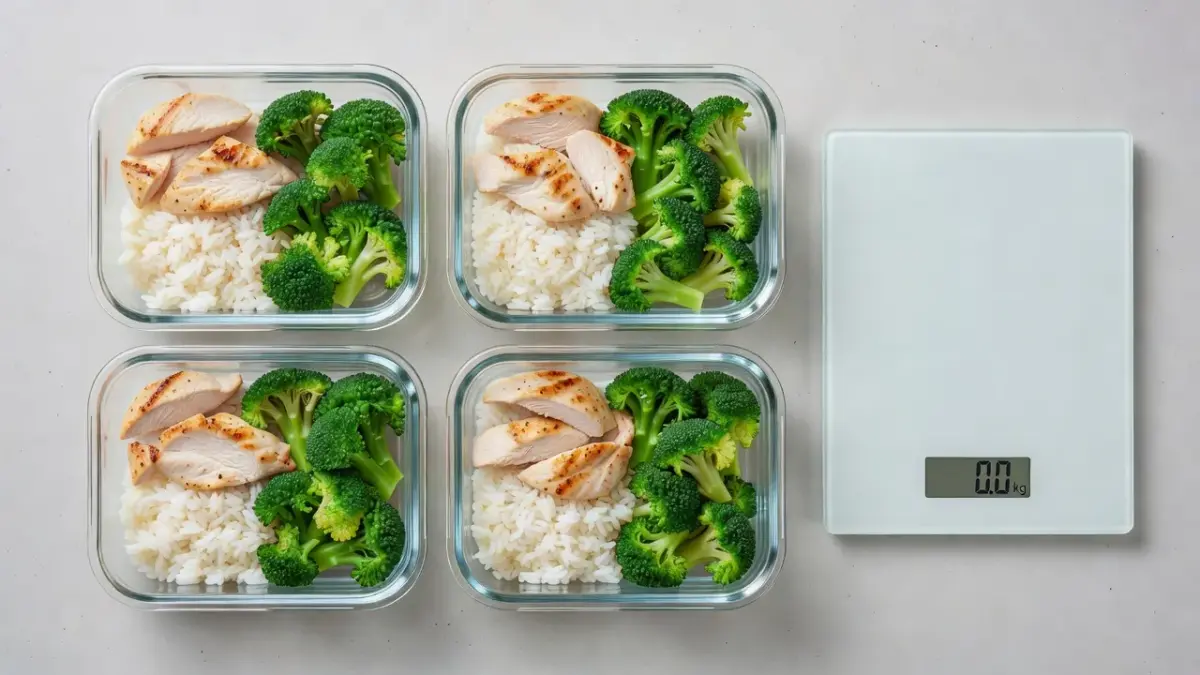
If you weigh 180 pounds, your weekly weight loss rate should sit between 0.9 and 1.8 pounds. Aggressive starvation diets dropping 3 to 5 pounds weekly force your liver to metabolize muscle proteins via gluconeogenesis to maintain basal blood glucose levels, leaving you with a smaller but soft physique often described as "skinny fat."
Does cardio interfere with muscle hypertrophy during fat loss?
Cardio only interferes with muscle hypertrophy - a phenomenon known as the interference effect - if high-intensity endurance training is scheduled immediately alongside heavy lifting or performed in excessive volumes. Running long distances daily creates molecular signaling pathways (such as AMPK activation) that can partially block the mTOR pathway responsible for triggering muscle protein synthesis.
You can entirely avoid this interference effect by following three tactical scheduling rules:
- Choose low-impact cardio modalities like incline walking, cycling, or rowing over high-impact outdoor running to reduce muscle damage.
- Keep cardio sessions separate from lifting workouts by at least 6 hours, or place cardio strictly after your weight training sessions.
- Cap steady-state cardio at 3 to 4 sessions per week for no longer than 30 to 45 minutes per session.
When implemented sensibly, low-intensity steady-state (LISS) cardio accelerates daily energy expenditure without impairing your strength capacity or leg recovery in the gym.
How to track muscle gain and fat loss progress accurately
To track true body recomposition, rely on a combination of progress photographs, waist circumference measurements, and strength metrics rather than scale weight alone. Because muscle tissue is approximately 18% denser than body fat by volume, your physical body shape can change dramatically while the bathroom scale remains unchanged.
To establish reliable, objective progress feedback, implement these tracking habits:
- Take consistent front, side, and back progress photos every 2 weeks under identical lighting and time of day (preferably fasted upon waking).
- Measure your waist circumference at the navel level every week; a shrinking waist alongside stable scale weight proves fat loss and simultaneous muscle gain.
- Record your gym performance logbook; maintaining or increasing your working weights during a energy deficit indicates intact muscle tissue.
- Consult comprehensive transformation benchmarks like our fitness transformation guide to set realistic expectations for your timeframe.
By combining consistent dietary management, evidence-based resistance training, and visual modeling tools, you can successfully shift your body composition toward higher muscle mass and lower body fat.
Frequently Asked Questions
What is intramuscular fat and how does it differ from subcutaneous fat?
Intramuscular fat (intramuscular triglycerides) consists of lipid droplets stored directly inside skeletal muscle fibers to provide local energy. Subcutaneous fat is stored immediately beneath your skin and is the visible layer responsible for obscuring muscular definition.
Does muscle weigh more than fat?
No, a pound of muscle weighs the exact same as a pound of fat, but muscle is roughly 18% denser than fat tissue. This structural density means one pound of muscle occupies significantly less space on your body frame than one pound of fat.
Can you turn fat directly into muscle tissue?
No, body fat cannot directly convert into muscle tissue because they are two distinct tissue types with entirely different cellular structures. Fat consists of triglycerides (carbon, hydrogen, oxygen), while muscle is made of protein tissue containing nitrogen atoms.
Why does scale weight stay the same during body recomposition?
Scale weight remains static during body recomposition because you are losing body fat mass at the exact same rate you are building skeletal muscle mass. The gain in lean tissue mass directly offsets the loss in adipose tissue mass.
How long does it take to see muscle definition when losing body fat?
Most individuals begin noticing visible muscle definition within 4 to 8 weeks of starting a structured deficit and lifting program. Noticeable changes depend on your starting body fat percentage and how much underlying muscle mass you currently possess.
Is it harder to build muscle in a calorie deficit as an advanced lifter?
Yes, advanced lifters face a significantly harder challenge building muscle in a deficit because they are already close to their genetic muscular potential. Advanced athletes usually maintain their muscle during a cut and schedule dedicated lean bulking phases to build new tissue.