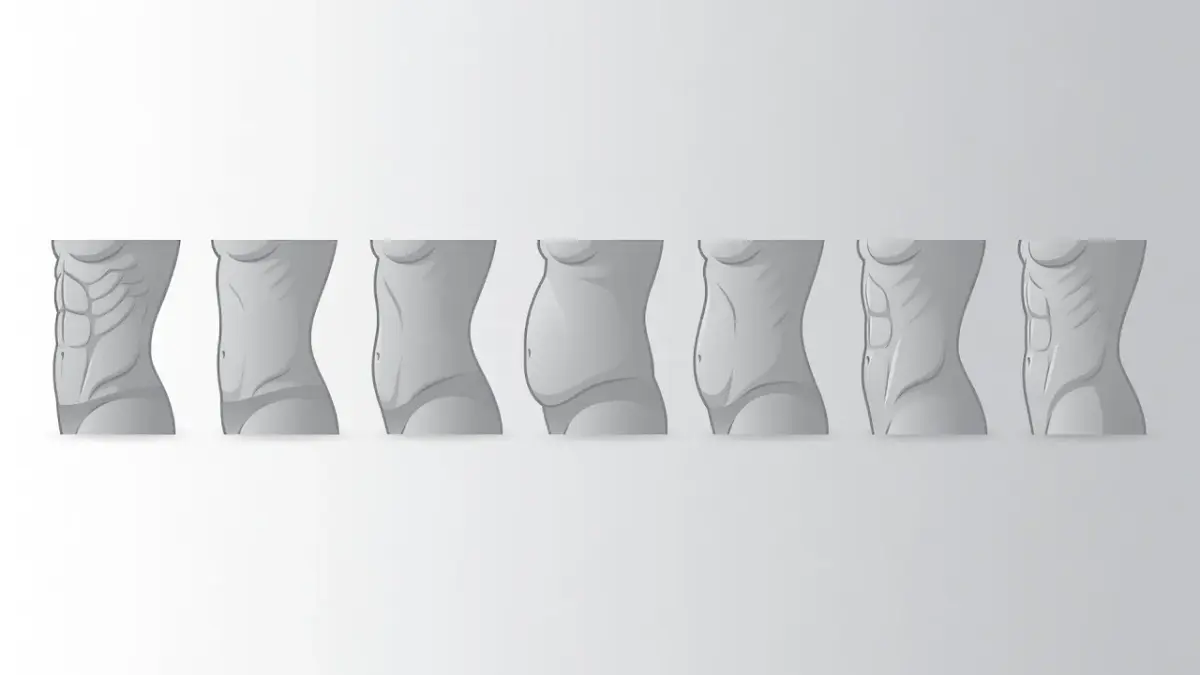
The seven main types of belly shapes are the lower belly pooch, bloated belly, visceral (apple) belly, skinny-fat belly, stress belly, alcohol belly, and postpartum belly. Each shape is driven by a distinct combination of subcutaneous fat, visceral fat storage, gastrointestinal fluid retention, or abdominal wall laxity rather than total body weight alone.
Understanding which specific belly shape you have allows you to set realistic fitness targets, choose appropriate posture adjustments, and accurately visualize midsection transformations on your photos.
What is the difference between visceral fat and subcutaneous fat in belly types?
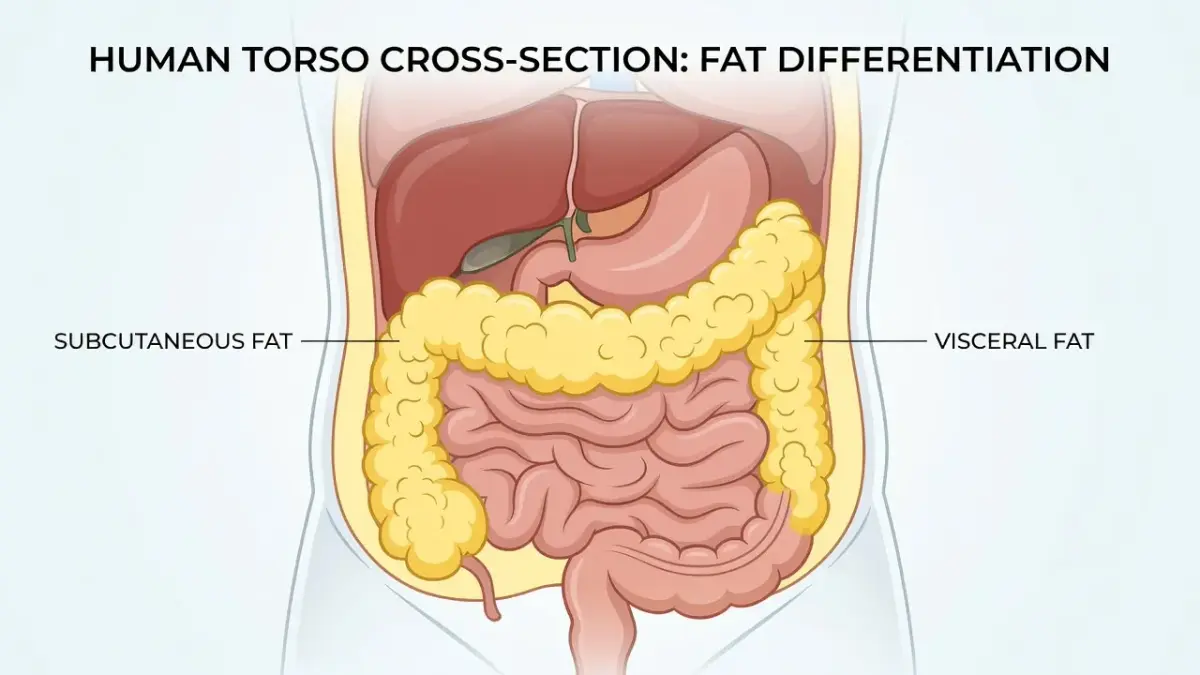
Subcutaneous fat sits directly beneath your skin above the muscle wall, while visceral fat gathers deep inside your abdominal cavity surrounding your internal organs. Subcutaneous tissue feels soft, squishy, and easy to pinch with your fingers.
Visceral tissue sits beneath your abdominal wall, pushing your stomach outward into a firm, protruding shape that does not sag when sitting. As detailed in research by Harvard Health Publishing, high levels of visceral fat pose greater cardiometabolic health risks than subcutaneous fat because it actively releases inflammatory cytokines into your portal vein.
| Layer | Description |
|---|---|
| Skin Surface | |
| Subcutaneous Fat Layer | Soft, pinchable, above muscle wall |
| Abdominal Muscle Wall | Rectus Abdominis |
| Visceral Fat Storage | Firm, internal, surrounds organs |
What is android vs gynoid body fat distribution?
Android body fat distribution stores excess tissue around the midsection and trunk, whereas gynoid body fat distribution deposits tissue around the hips, thighs, and buttocks. Android distribution creates an apple shape common in adult men and postmenopausal women.
Gynoid distribution creates a pear shape typically seen in premenopausal women due to estrogen signaling. According to anatomical data on Wikipedia, android patterns carry a higher correlation with insulin resistance and central obesity than gynoid patterns.
The 7 Primary Types of Belly Shapes Explained
Each belly shape has distinct visual characteristics, underlying physiological drivers, and specific challenges when attempting to tone or edit your profile in photos.
1. The Lower Belly Pooch
The lower belly pooch appears as a localized bulge below the belly button while the upper abdominal area remains relatively flat. This shape is typically composed of soft subcutaneous fat combined with pelvic tilting or weak transverse abdominis muscles.
It is very common in individuals who sit for long hours, causing tight hip flexors that tilt the pelvis forward (anterior pelvic tilt). Core strengthening and posture correction are usually more effective here than aggressive calorie cuts.
2. The Bloated Belly
A bloated belly shape changes dramatically throughout the day, appearing flat in the morning and expanding significantly after meals. Unlike fat storage, bloating is caused by trapped gas, digestive delays, or food sensitivities inside your gastrointestinal tract.
The abdomen feels tight and hard to the touch, but the distension drops back down overnight. Reducing sodium intake, identifying food intolerances, and drinking adequate water help flatten this temporary enlargement.
3. The Visceral (Apple) Belly
A visceral belly creates a uniform, hard, and rounded protrusion that extends from just below the sternum down to the waistline. Because the fat is stored underneath the muscle layer, your stomach feels solid rather than soft.
This shape is directly tied to metabolic factors, high-sugar diets, and genetic predisposition. Reducing high-glycemic carbohydrates and adding regular cardiovascular exercise are the standard ways to shrink deep abdominal fat.
4. The Skinny-Fat Belly
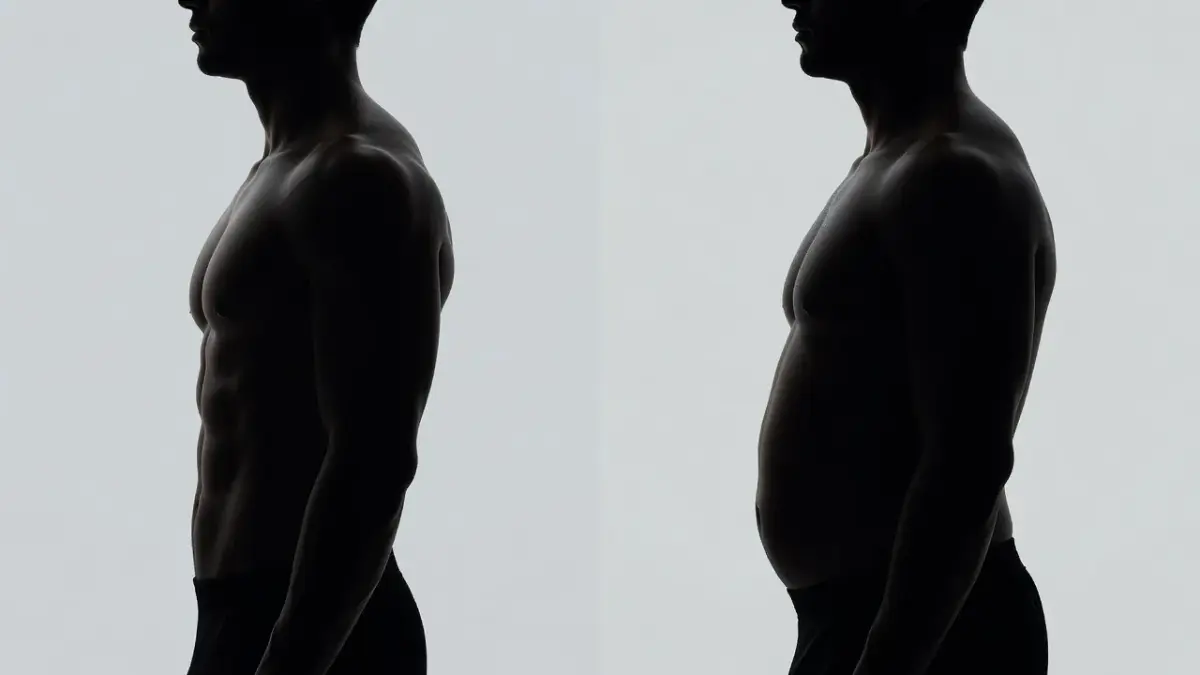
A skinny-fat belly presents as a noticeable waistline bulge on a person who otherwise has a normal Body Mass Index (BMI) and slender arms and legs. This pattern happens when low muscular tissue is paired with central fat accumulation.
People with this shape often fall into the trap of doing intense cardio while severely restricting calories, which further reduces lean muscle. Building core muscle mass through resistance training shifts your body composition much better than standard weight loss.
5. The Stress (Cortisol) Belly
A stress belly concentrates fat specifically in the deep midsection while leaving the limbs thin, often accompanied by noticeable fluid retention. Prolonged elevation of the stress hormone cortisol signals your body to store visceral fat near the liver for quick energy access.
Poor sleep quality and chronic physical or emotional stress aggravate this shape. Lowering cortisol through structured sleep hygiene and moderate exercise works better here than high-intensity fasting routines.
6. The Alcohol or Beer Belly
An alcohol or beer belly is a dense, high-volume abdominal protrusion caused by excess empty calories and impaired liver fat metabolism. When alcohol is consumed, your liver prioritizes processing ethanol over burning dietary fat, leading to rapid storage in the abdomen.
This shape affects both men and women who drink frequently or consume calorie-dense beverages. Cutting back on alcohol intake creates noticeable visual reductions in midsection circumference within weeks.
7. The Postpartum Belly
A postpartum belly is characterized by loose skin, lower abdominal sagging, and a persistent central gap known as diastasis recti. During pregnancy, the connective tissue separating the abdominal muscles stretches to accommodate the growing fetus.
Standard sit-ups can make this gap worse by pushing the tissues outward. Targeted pelvic floor exercises and specialized physical therapy help close the muscle separation and tighten the lower midsection.
What does 'skinny fat' mean as a belly type?
'Skinny fat' describes a body composition where an individual has a normal weight on the scale but a high body fat percentage concentrated around the midsection. People with this shape lack adequate muscle mass to give their stomach a firm, defined appearance.
This condition often stems from sedentary habits combined with low-protein diets or repeated crash dieting. If you want to transform a skinny-fat physique, check out our guide on toned body definition and science to understand how progressive resistance training alters body fat ratios.
What causes a bloated belly shape?
A bloated belly shape is primarily caused by intestinal gas accumulation, slow digestion, fluid retention, or chronic gut inflammation. High-sodium meals force your tissue to hold onto water, expanding your lower and upper abdomen within hours.
Swallowing air while eating quickly, drinking carbonated beverages, or consuming fermentable oligosaccharides (FODMAPs) also causes significant visible swelling. If your belly is flat when you wake up but expands by evening, digestive gas is the primary driver rather than fat storage.
How is abdominal obesity (central obesity) classified medically?
Abdominal obesity is classified medically using waist circumference thresholds and waist-to-hip or waist-to-height ratios. According to clinical guidelines from the Mayo Clinic, a waist circumference exceeding 40 inches (102 cm) for men or 35 inches (88 cm) for women indicates central obesity.
Healthcare providers also measure waist-to-height ratio, where keeping your waist circumference under half your height signals lower metabolic risk. Medical classifications prioritize these measurements over traditional scale weight because abdominal volume correlates directly with cardiovascular disease.
| Belly Shape Type | Primary Location | Fat Classification | Dominant Cause | Best Strategy for Visual Reduction |
|---|---|---|---|---|
| Lower Belly Pooch | Below navel | Subcutaneous | Anterior pelvic tilt & soft tissue | Core strength & pelvic posture alignment |
| Bloated Belly | Entire abdomen | None (Intestinal gas/water) | Digestive slow-down & food sensitivity | Hydration & sodium/FODMAP reduction |
| Visceral (Apple) | Mid-to-upper torso | Visceral (Deep organ fat) | High-sugar diet & insulin resistance | Calorie control & cardio training |
| Skinny-Fat Belly | Around waistline | Subcutaneous & Visceral | Low muscle mass & sedentary lifestyle | Hypertrophy training & high protein intake |
| Stress Belly | Central abdomen | Visceral | High cortisol & sleep deprivation | Sleep optimization & stress reduction |
| Postpartum Belly | Lower abdomen | Subcutaneous & tissue laxity | Diastasis recti muscle separation | Pelvic floor rehab & specialized core work |
Visualizing Belly Shape Changes for Photos and Fitness Goals
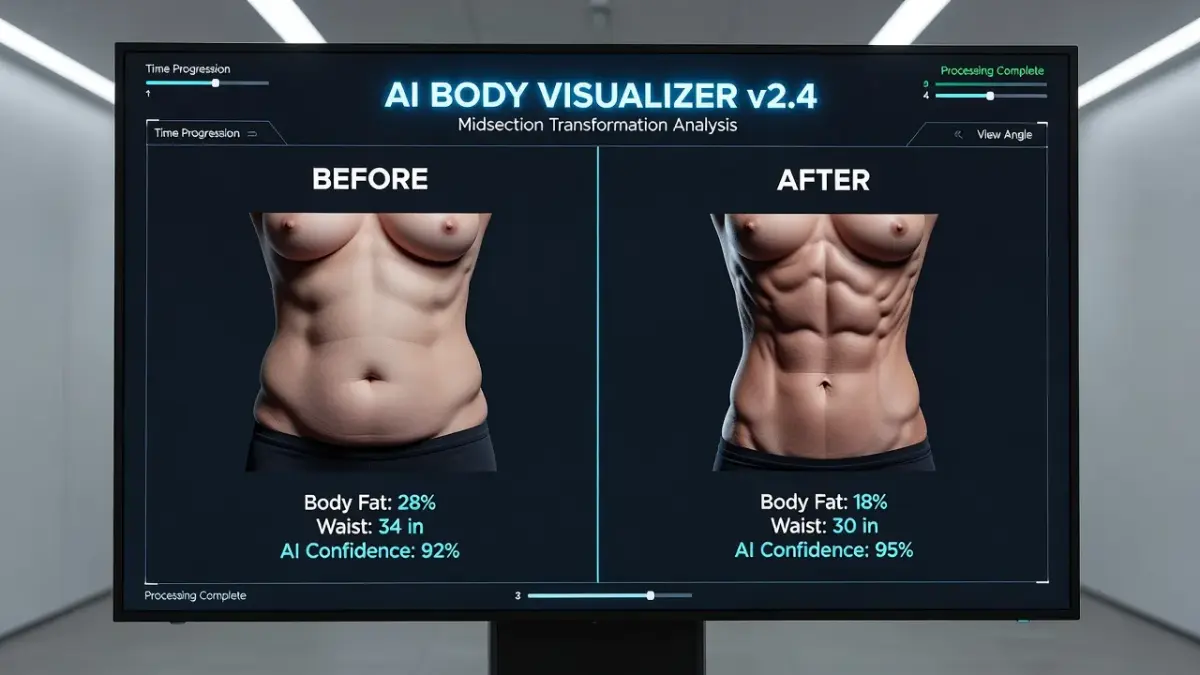
Previewing how your torso will look after weight loss or muscle gain helps maintain motivation during long workout programs. It also allows social media creators and fitness enthusiasts to adjust their aesthetic goals before committing to specific training routines.
How to Preview Muscle Definition and Waist Slimming digitally
Digital tools allow you to simulate body composition shifts directly on your current photos without complex photo-editing skills. Rather than relying on rigid manual tools or complex liquify filters that smudge surrounding room details, modern apps utilize artificial intelligence to preserve your natural appearance.
For iPhone and iPad users, BodyBlend offers an intuitive way to test target body shapes on your own photos. The app includes 17 preset body shapes (such as Muscular, Fit, Hourglass, or Slim) along with 11 targeted body part edits, allowing you to preview small waist edits or visible abs with a single tap.
Because BodyBlend keeps your face, skin tone, clothing textures, and background unwarped, the output looks completely photorealistic. The app is free to download with one free generation included, while full access is available via a Pro subscription ($9.99/week or $14.99/month).
If you want to compare multiple tools for simulating body composition shifts, explore our curated breakdown of the best AI body generator tools available in 2026.
Posing Techniques to Instantly Flatten Your Belly Profile
Adjusting your standing angle and shoulder posture can visually flatten your midsection by up to two inches on camera. Slouching rolls your spine forward, pushing your abdominal contents outward into an artificial lower belly pooch.
- Lengthen your spine: Imagine pulling the top of your head toward the ceiling to open your ribcage.
- Engage your transverse abdominis: Lightly draw your belly button back toward your spine without holding your breath.
- Shift your hip angle: Turn your hips 45 degrees away from the camera lens while keeping your shoulders square.
- Distribute your weight: Place your weight on your back foot to elongate your torso line.
For more detailed camera positioning strategies, read our full guide on how to look thinner in pictures using simple posing tips.
How to Determine Which Belly Shape You Have
Identifying your exact shape requires a combination of physical inspection, measurement ratios, and daily tracking.
Step 1: Perform the Pinch Test
Stand upright and use your thumb and index finger to pinch the skin two inches to the side of your belly button. If you can easily grasp a soft layer of tissue, you are holding subcutaneous fat. If your abdomen is firm and protruding but you cannot pinch more than half an inch of tissue, your belly shape is driven by deep visceral fat.
Step 2: Track Morning vs. Evening Variations
Measure your waist circumference immediately after waking up and again right before bed for three consecutive days. A difference of more than 1.5 inches between morning and night points directly to a bloated belly shape caused by digestive activity rather than permanent fat storage. To find the right spot, see where the waist body part is located and measured.
Step 3: Check Your Standing Pelvic Tilt
Stand sideways next to a full-length mirror in your normal relaxed stance. Look at the angle of your beltline: if it tilts steeply downward toward the front while your lower spine curves aggressively inward, an anterior pelvic tilt is exaggerating your lower belly pooch.
Frequently Asked Questions
What are the main types of belly shapes?
The seven primary types of belly shapes are the lower belly pooch, bloated belly, visceral (apple) belly, skinny-fat belly, stress belly, alcohol belly, and postpartum belly. Each shape is caused by different factors including subcutaneous fat, visceral fat, gas accumulation, or weak abdominal muscles.
Can you target fat loss in a specific belly shape?
No, you cannot spot-reduce fat from a specific area of your belly through targeted exercise alone. Body fat loss occurs systemically across your entire body when you maintain a caloric deficit, though core exercises can tighten the underlying muscle structure beneath the fat.
How do I get rid of a lower belly pooch?
To reduce a lower belly pooch, combine a moderate calorie deficit with transverse abdominis exercises like planks and dead bugs. Fixing anterior pelvic tilt through hip flexor stretches and glute strengthening also helps pull your lower abdomen flat.
Why is my belly fat hard instead of soft?
Hard belly fat is visceral fat stored deep inside your abdominal cavity beneath your muscle wall. Because it sits behind firm abdominal muscles, it pushes the wall outward into a solid, rounded shape that cannot be pinched.
What is the difference between bloating and belly fat?
Belly fat remains constant throughout the day and feels soft or firm depending on whether it is subcutaneous or visceral. Bloating changes dramatically, causing your stomach to expand after eating and flatten out overnight after digestive gas dissipates.
How long does it take to change your belly shape?
Visual changes in bloated bellies can happen within 24 to 48 hours through dietary adjustments. Subcutaneous and visceral fat reduction typically requires 8 to 12 weeks of consistent nutrition and strength training to produce noticeable profile shifts.
Does stress really increase belly fat?
Yes, chronic stress elevates cortisol levels, which promotes visceral fat storage around your internal organs. Elevated cortisol also increases appetite and cravings for high-calorie foods, compounding midsection weight gain.